
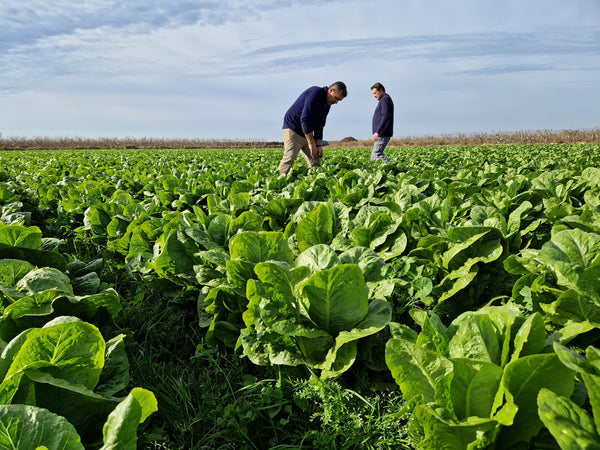

Out in the field, still wearing his picking gloves, our colleague Antonio grabs a chestnut off the ground, peels the shell with his fingernail and eats it raw. Seeing the surprise on our faces, he laughs:
«Mid-morning, when you start flagging… we don't bring a sandwich, we bring these.»
Most people only know chestnuts roasted or boiled, and many never even consider eating them raw. You can, and in chestnut-growing areas people always have. But there's a trick to it: you have to remove both skins properly. In this article we'll tell you how to eat raw chestnuts, why the thin inner skin tastes bitter, what chestnuts really give you and how they differ from other nuts.

One chestnut, two skins
When you peel a raw chestnut, you'll find two layers:
- The shell, the hard, shiny brown outer skin. It's the one you score before roasting.
- The thin skin, a light brown, slightly fuzzy film stuck to the flesh and tucked into its folds. This is the tricky one.
Antonio is clear about it: raw, «you have to take off both its skins». The shell comes off easily. The thin skin has to be scraped off with your fingernail or the tip of a knife, and on chestnuts with deep folds it's the most fiddly part.

Why the thin skin leaves your mouth dry
Tasting a chestnut with the thin skin still on, one of us said it reminded him of persimmon. That's no coincidence. That skin is rich in tannins, the same compounds that make an unripe persimmon leave your mouth rough, as if it were drying out. Tannins bind to the proteins in saliva and cause that astringent feeling. We explain how it works in persimmons in how to remove the astringency from persimmons.
That's why raw chestnuts are best eaten well peeled. With the thin skin, they're bitter and rough. Without it, they're crunchy, juicy and lightly sweet, with a flavour reminiscent of raw hazelnut.
How to eat raw chestnuts
- Pick fresh, firm chestnuts, with no holes or soft spots.
- Remove the shell with a small knife, starting from the flat side.
- Scrape off the thin skin until the flesh is clean and cream-coloured.
- Chew well. Raw chestnuts are very starchy and are easier to digest when well chewed.
- Start with just a few. In large amounts, raw chestnuts can feel heavy for some people.
There's one detail several nutritionists repeat: freshly fallen chestnuts have more tannins and more starch. If you leave them to rest for a week or ten days somewhere cool, some of that starch turns into sugars and the chestnut becomes sweeter and easier to digest. It's advice based more on experience than on specific studies, but anyone who has tried chestnuts at different points in the season notices the difference.
A trick for peeling them more easily
If the thin skin won't budge, here's a trick. Score the shell and blanch them for a minute in boiling water, or give them a few seconds in the microwave once scored, in batches of six or seven. The skin comes away much more easily. Just bear in mind the chestnut won't be completely raw anymore.
What a chestnut gives you
Antonio stands by his mid-morning chestnut because «it has good fat». Here we need to clarify something, because the chestnut is the oddest nut of all: it has almost no fat.
| Per 100 g of raw chestnut | Approximate value |
|---|---|
| Water | Around 50 % |
| Energy | Between 180 and 200 kcal |
| Carbohydrates | Between 36 and 44 g, mostly starch |
| Fat | Between 1 and 2.5 g |
| Fibre | Between 6 and 7 g |
| Protein | Between 2 and 3 g |
Tables vary a little depending on the source and the variety, but the picture is clear. A walnut is over 60 % fat and an almond around 50 %. The chestnut barely reaches 2 %. Its energy comes from starch, like cereals or potatoes, which is why in many mountain areas it was called the bread of the poor and was ground into flour.
So Antonio is right about what matters: the chestnut is a snack that gives you real energy to keep working. It's just that the energy doesn't come from fat, but from carbohydrates.

Other benefits
- Vitamin C. Raw chestnuts are one of the few nuts with a noticeable amount of vitamin C. Much of it is lost in the heat of roasting or boiling, so raw chestnuts keep more.
- Gluten-free. Chestnuts contain no gluten, and their flour is used in baking for people with coeliac disease. If that's you, look for certified flours to avoid cross-contamination.
- Fibre. They provide a good amount of fibre, which helps you feel full.
Why don't people eat raw chestnuts?
Antonio has his theory: people just don't know. For most, a chestnut is what the street vendor roasts in the square and not much else. People don't know you can eat them raw, boiled, puréed or as flour. Nor can they tell a freshly picked chestnut from one that's been in cold storage for weeks. When someone tries a well-peeled raw chestnut in the field, the reaction is usually the same as ours: surprise.
If you'd rather roast them, we show you how to do it at home just like the street vendors in roasted chestnuts at home.
Frequently asked questions
Is it bad to eat raw chestnuts?
No, as long as they're well peeled and eaten in moderation. In large amounts they can feel heavy because of their starch and tannins. If they don't sit well, have them roasted or boiled instead.
Do you have to remove the thin skin?
Yes. Raw, the thin skin is bitter and leaves your mouth rough because of its tannins. Roasted or boiled, it comes off more easily.
Are chestnuts fattening?
They have fewer calories than other nuts because they contain lots of water and very little fat. A handful of chestnuts has far less energy than the same weight of walnuts or almonds.
Can people with coeliac disease eat chestnuts?
Yes, chestnuts are gluten-free. For flour, it's best to choose one certified gluten-free.
From the chestnut grove to your table
A raw chestnut, freshly fallen and well peeled, is one of those flavours you only get to know in the countryside. We're working with Antonio on a way to bring his freshly picked chestnuts to your home. In the meantime, in Reserve your harvest you'll find the autumn fruit we pick the same day it ships. From the field to the box, and from the box to your home. That simple, that authentic.

