
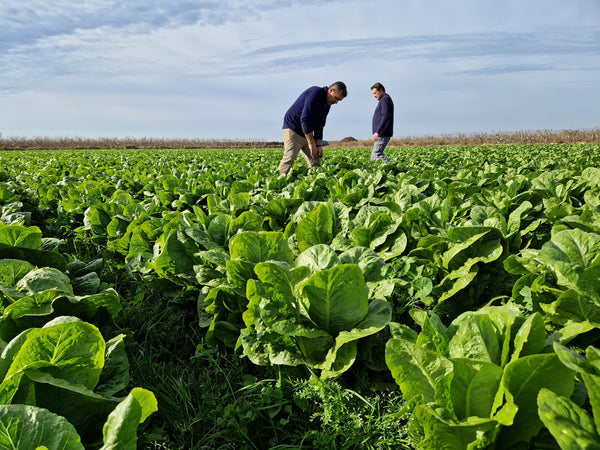

Walking among the chestnut trees with our fellow farmer Antonio, the conversation ended up, as it always does with farmers, on pests. And there was one he remembered especially clearly, because a few years ago it left the trees in the valley unrecognisable:
«Four years ago we had to deal with the gall wasp. They'd sting the chestnut trees and the leaves came out shaped like little nests, like tiny honeycombs.»
The chestnut gall wasp is a tiny insect that arrived from Asia and in little more than a decade has spread across almost every chestnut-growing area in Spain. In this article we'll tell you what it is, why it does so much damage, how it's been fought, and why the chestnut trees in Antonio's valley, as he puts it himself, «have been recovering little by little».
What is the chestnut gall wasp?
Its scientific name is Dryocosmus kuriphilus, and it's a black wasp just a few millimetres long that doesn't sting people. It's native to China and is considered one of the most damaging chestnut pests in the world. In Europe it was first detected in Italy at the start of this century, and in Spain in January 2012, in Catalonia, in La Garrotxa and Montseny. From there it spread towards the Cantabrian coast and the rest of the peninsula, helped above all by the transport of infected plants. In Asturias, for example, it arrived in 2014, and today it's found across the whole region.
How it does damage
What Antonio describes as nests or honeycombs are galls. The gall wasp lays its eggs inside the chestnut's buds in summer. The larvae spend the winter hidden in the bud, showing no sign, and in spring, when the tree sprouts, the tissue reacts by forming swollen balls, green or reddish, on the leaves and new shoots. The larvae live inside each gall, feeding off the tree until the new wasps emerge in summer and the cycle starts all over again.

The problem is that those deformed shoots no longer grow normally or flower. Fewer healthy shoots means fewer burrs and fewer chestnuts, and a tree that loses vigour year after year. Loss figures vary a lot depending on the area and how severe the attack is. Some studies talk about fruit set falling by up to 70 % and estimates reaching 80 %, although on average losses are put at between 20 and 40 % of production. Some specialists consider 80 % too high as a general estimate, so it's best taken as a maximum.
On top of that, dry galls and damaged shoots are a way in for other diseases, such as chestnut blight, which we told you about in chestnut blight and why pruning is so delicate.
Why spraying doesn't work
Faced with a pest, the first thing that comes to mind is an insecticide. With the gall wasp it doesn't work: the larvae spend almost their whole lives protected inside the bud or gall, where no treatment reaches properly, and the adults fly over a long period in summer. Spraying entire chestnut groves, many of them on hillsides and mountains, would be expensive, not very effective and harmful to other insects. That's why, all over the world, the solution has been biological.
The ally that came from China: Torymus sinensis
Where the gall wasp comes from lives its natural enemy, another tiny wasp called Torymus sinensis. Its life cycle is synchronised with the pest's: the female lays her eggs inside freshly formed galls and her larva eats the gall wasp larva. First Japan, and later Italy, used it successfully to control the pest.
In Spain, Torymus sinensis has been a biological control agent authorised by the Ministry of Agriculture since 2019, and the regional governments have carried out releases in their chestnut groves. What Antonio remembers as the regional government's treatment in the areas with the most chestnut trees was, in all likelihood, one of these campaigns:

«The regional government came and treated every area, especially where there are loads of chestnut trees. And honestly, they've been recovering little by little.»
What the data says
- Andalusia. IFAPA confirmed that the parasitoid has become established in practically every chestnut grove in Málaga and that its population has grown exponentially, although the first surveys didn't yet show an improvement in damage. Experience in other countries puts acceptable control at around four years after release.
- Castile and León. In El Bierzo, the regional government carried out releases for several consecutive years. The working hypothesis was to see the first results after three or four years and optimal control after six or seven, and the provisional data pointed that way.
- Galicia. The regional Department of Rural Affairs has released 1.6 million individuals, with an investment of over 2.2 million euros, and in some plots parasitism has reached 20 %, and in places 44 %.
- The north. In Catalonia, the Basque Country and Navarre, Torymus has also arrived by spreading naturally from France.
It fits with what Antonio tells us. Biological control isn't instant: you have to wait for the parasitoid population to grow enough, and the trees need several seasons to recover their shoots. Four years after the releases, the chestnut trees in the valley have healthy crowns again.

An open debate
Not everyone has welcomed the releases. Organisations such as Ecologistas en Acción have criticised the introduction of an exotic species without properly assessing its effects on native insects. It's a reasonable concern that research is still looking into. So far, Torymus has proven highly specialised in the gall wasp, and it's the tool that has managed to curb the pest in the countries that suffered it first.
What you can do if you have chestnut trees
- Don't move plants without control. The gall wasp travels in infected saplings and scions. Buy your trees from authorised nurseries, with a plant passport.
- Notify your region's Forest Health service if you see galls on your chestnut trees, so the area is included in the monitoring and release programmes.
- Don't burn or remove dry galls in areas where Torymus has been released without checking first, because the parasitoid's larvae may be overwintering inside.
- Look after the tree. A well-pruned chestnut tree, with clean ground and no open wounds, resists the attack better and recovers sooner.
Frequently asked questions
Does the gall wasp affect the chestnuts we eat?
Not directly. It doesn't attack the fruit, but the buds and shoots. What it does is reduce the number of chestnuts the tree produces. The chestnuts that do ripen are perfectly normal.
Does it sting people?
No. It's a tiny wasp that doesn't sting and isn't dangerous to people or animals.
Do the galls kill the chestnut tree?
Not directly, but a chestnut tree attacked year after year loses vigour, produces less and is more exposed to other diseases.
How long does biological control take to show results?
Based on experience in Italy and Spain, the first results are usually seen three or four years after the releases, and optimal control after six or seven.
From the chestnut grove to your table
Behind every chestnut season there are trees that have had to overcome pests like this one, and farmers who've waited years for them to recover. We're working with Antonio on a way to bring his freshly picked chestnuts to your home. In the meantime, in Reserve your harvest you'll find the autumn fruit we pick the same day it ships. From the field to the box, and from the box to your home. That simple, that authentic.
Sources
- Phytoma. Andalusia fights the chestnut gall wasp with the parasitoid T. sinensis
- Phytoma. Galicia fights the chestnut gall wasp by releasing Torymus sinensis
- Cesefor. New campaign against the chestnut gall wasp in Ávila, León, Salamanca and Zamora
- El Bierzo Digital. Torymus sinensis releases resume
- Forest Systems (CSIC). Torymus sinensis in Spain: natural spread from France and first establishment data
- Government of Navarre. Spread of Torymus sinensis as a control method
- Principia. The (biological) chestnut war
- SERPASA. Biological control actions against the chestnut gall wasp in Asturias (2021)
- Ecologistas en Acción. A dangerous solution against the chestnut gall wasp
- Castanea Sativa. The gall wasp

