
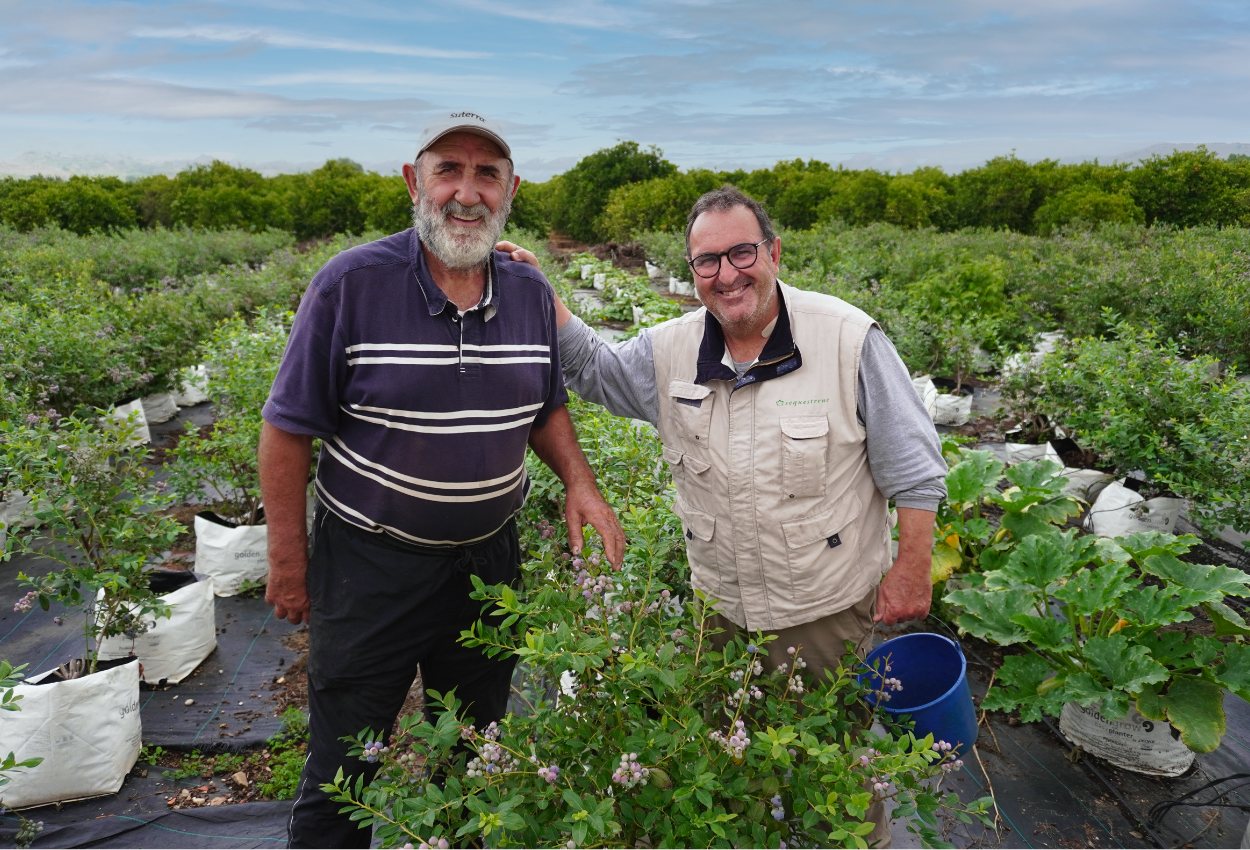
Blueberries have become one of the most promising and profitable crops in Spain, with a diversity of varieties adapted to different climatic zones. From highbush blueberries in the north to heat-resistant varieties in the south, this fruit offers options for almost any region of the country. In this comprehensive guide, we will explore the main blueberry varieties, their distinctive characteristics, cultivation requirements, and health benefits.
What types of blueberries are grown in Spain?
In Spain, blueberry cultivation has experienced exponential growth, especially in Huelva, where 82% of national production is concentrated with over 3,600 hectares. However, significant cultivation is also found in the Cantabrian coast, Galicia, Asturias, and increasingly, in areas like Valencia and the Spanish Levante region.
Blueberries cultivated in Spain mainly belong to three genetic groups, each with specific characteristics and needs:
- Northern Highbush blueberries: Originally from the northeastern United States, they require many chilling hours (between 800-1,200 hours).
- Southern Highbush blueberries: Developed through cross-breeding to adapt to warmer climates, with reduced chilling requirements (400-600 hours).
- Rabbiteye blueberries: With intermediate chilling requirements (500-600 hours) and greater resistance to adverse conditions.
Northern Highbush blueberry varieties: ideal for northern Spain
Northern Highbush varieties are perfect for regions like Galicia, Asturias, and the Basque Country, where temperatures are cooler and sufficient chilling hours accumulate during winter. These plants need between 700 and 1,200 hours below 7°C to flower properly.
Among the most prominent varieties are:
| Variety | Ripening season | Outstanding characteristics |
|---|---|---|
| Duke | Early (May-June) | Excellent flavor, high productivity, firm fruit |
| Bluecrop | Mid-season | Very productive, large fruit, drought-resistant |
| Liberty | Late | Excellent flavor, good shelf life |
| Aurora | Very late (August-September) | Frost-resistant (-10°C), 3.5 kg/plant production |
| Legacy | Mid-season | High productivity (20-25 t/ha), good firmness |
These varieties tend to be more robust and produce fruit with a more intense and complex flavor. As Antonio, a Valencian farmer with experience in the sector, points out: "Our open-air cultivated blueberry is stronger, wilder. It lasts longer: I can send it 500 km in a cardboard box without any refrigeration. You can't do that with a blueberry grown under plastic."

Southern Highbush blueberry varieties: the revolution in Huelva
Southern Highbush varieties have revolutionized blueberry cultivation in Spain, especially in Huelva and other southern regions. These blueberries require fewer chilling hours (between 400-600 hours) and are adapted to warmer climates, allowing for earlier production.
The most prominent varieties include:
- New Hanover: Requires 500-600 chilling hours, stands out for its record productivity of up to 25 t/ha in Huelva, with 18 mm fruits and 12.7°Brix. Its rhizomatous root system improves water absorption.
- Ventura: Ultra-early ripening (March), with caliber ≥18mm, ideal for premium markets.
- Star: Large caliber and good firmness, although it presents some health problems.
- Alixblue: Good adaptation to warm climates and high productivity.
- Gupton: Disease-resistant and good fruit quality.
These varieties are constantly evolving, with new selections appearing every year, aiming to improve aspects such as disease resistance, fruit quality, and adaptation to different climatic conditions.
Rabbiteye blueberries: resistance and versatility
Rabbiteye blueberries are less common in Spain, but they offer interesting advantages such as greater drought and disease resistance. They have intermediate chilling requirements (500-600 hours) and can grow taller than other types, reaching over 5 meters in the wild.
Some prominent varieties are:
- Powderblue: Frequently used as a rootstock to increase resistance to diseases such as Verticillium wilt.
- Ochlockonee: Good production and fruit quality.
- Centra Blue: Adaptable to different growing conditions.
Although their fruit has lower commercial quality than other types, their resistance makes them interesting for certain growing conditions or as a base for rootstocks.

Hybrid varieties: the best of both worlds
A growing trend in blueberry cultivation is the development of hybrid varieties that combine characteristics from different groups. The most prominent case is Ozarkblue, resulting from a cross between Southern and Northern Highbush by the University of Arkansas.
Ozarkblue combines the precocity of the south (500 chilling hours) with the hardiness of the north, allowing its cultivation from Huelva to Lleida. This versatility makes it a very interesting option for intermediate zones.
Other innovative hybrid varieties include:
- Blue Maldiva: Tolerates pH up to 6.5 and can reduce fungicide applications by 40%.
- TH-1996 (Matías™): Tolerates pH up to 6.8, revolutionizing cultivation in traditionally marginal soils of the Spanish Levante.
- AzraBlue: Adapted to semi-arid conditions with 70% less water requirement.
How to choose the right blueberry variety for your area?
Selecting the right variety is crucial for successful cultivation. According to Antonio, a fellow farmer at Campos del Abuelo: "The main thing for me is the calendar. I cannot compete with the farmers in Huelva, who start producing from January. So I have to look for varieties that allow me to extend the season, harvesting between May and July."
Key factors to consider are:
- Chilling hours: Determines if the plant will flower properly in your area. Northern varieties need more chilling hours than southern varieties.
- Soil pH: Blueberries prefer acidic soils (pH 4.5-5.5), although new varieties can tolerate higher pH.
- Production calendar: Consider when you want to produce, taking into account competition and market prices.
- Disease resistance: Especially important in humid areas where diseases like anthracnose can be problematic.
- Fruit quality: Size, firmness, flavor, and post-harvest life vary significantly among varieties.
Varietal stratification allows Spain to offer fresh blueberries for 10 months a year:
- December-January: Snowchaser and Cupla in Almería greenhouses
- February-April: New Hanover and Ventura in open fields (Huelva)
- May-July: Ozarkblue and Duke (north-south transition)
- August-October: Aurora and Liberty (Galicia, Asturias)
Varietal innovation and genetic improvement in blueberries
Varietal innovation is constant in the blueberry sector, with breeding programs seeking to develop varieties increasingly adapted to different conditions and with better commercial characteristics.
In Spain, the Andalusian Institute of Agricultural Research and Training (IFAPA) leads the breeding program for Southern Highbush, having developed varieties such as Camelia® and Legacy®, which dominate 35% of the Huelva area. These selections stand out for their firmness index (≥250 g/mm²) and post-harvest life (30-35 days in controlled atmosphere).
Current trends in varietal selection focus on:
- Climate resilience: Varieties like Blue Madeira® maintain stable productivity (+15%) during heatwaves ≥40°C, thanks to foliar thermotolerance mechanisms.
- Nutraceutical efficiency: Selection for high anthocyanin content (≥4 mg/g) and antioxidant capacity (ORAC ≥50 μmol TE/g).
- Sustainability: Reduction of inputs through self-compatible varieties (85% fruit set without pollinators) and resistance to diseases such as Phytophthora cinnamomi.
- Water stress tolerance: Introgression of V. darrowii genes to reduce irrigation needs by 30%.
- Post-harvest robustness: Varieties like KeplerBlue® maintain firmness >2.5 N for 45 days in cold chain.

Cultivation requirements for different blueberry varieties
Although each variety has its peculiarities, there are some general requirements for blueberry cultivation:
Soil and pH
Blueberries prefer acidic soils, with a pH between 4.5 and 5.5. New varieties can tolerate higher pH, but generally, if the soil is alkaline, it will need to be acidified. As Antonio points out: "Blueberries prefer acidic soils, although they can adapt to alkaline ones with the help of fertilizers."
To improve soil acidity, you can use:
- Sphagnum peat moss
- Pine bark
- Specific acidic soil for blueberries
- Acidifying fertilizers
Irrigation
Irrigation is critical in blueberry cultivation. As Antonio, who has years of experience, states: "They are very sensitive to drought because their roots are shallow. Blueberries need regular watering to keep the soil constantly moist, but not waterlogged."
Drip irrigation is the most recommended system, allowing for:
- Precise water supply
- Minimization of disease risk
- Exact control of water quantity
- Possibility of fertigation
Irrigation frequency varies depending on climatic conditions, but generally, it is recommended to water 2-3 times a week during the active growth period, increasing in summer.
Climate and protection
Blueberry plants are sensitive to extreme weather conditions:
- Wind: Can cause flower and fruit drop. It is recommended to protect the plantation with windbreaks.
- Excessive heat: Temperatures above 30°C can negatively affect the plant. In warm areas, it is advisable to provide partial shade.
- Frosts: Can damage flowers and young fruits. Northern varieties are more resistant.
- Birds: Are a serious threat to production. The use of protective nets is recommended.
Nutritional properties and health benefits of blueberries
Blueberries are considered a "superfruit" due to their exceptional nutritional profile and health benefits. With only 60 calories per 100 grams, they are a nutritious and light option.
Among their most notable components are:
- Anthocyanins: Responsible for the blue color, they have powerful antioxidant and anti-inflammatory effects.
- Proanthocyanidins: Potent anti-inflammatory agents that help reduce the harmful effects of certain pathologies.
- Resveratrol: With antimutagenic, anticancer, and anti-inflammatory properties.
- Gallic acid and ellagic acid: Can reduce the negative impact of cancer thanks to their anticancer properties.
- Vitamins: Rich in vitamins A, C, K, and B-complex (B1, B2, B3, B5, B6).
- Minerals: Contain manganese, copper, zinc, selenium, sodium, calcium, potassium, magnesium, phosphorus, and iron.
- Fiber: Helps regulate intestinal function and provides a feeling of fullness.
Health benefits include:
- Cardiovascular protection: Reduce blood pressure and improve cholesterol levels.
- Cognitive improvement: Enhance memory and cognitive functions.
- Anticancer properties: Phenolic compounds can help prevent certain types of cancer.
- Eye health: Anthocyanins prevent damage to the retina.
- Urinary protection: Prevent urinary tract infections.
- Anti-aging effect: Combat free radicals, responsible for cellular aging.
- Glucose regulation: Improve insulin sensitivity, benefiting people with diabetes.

Storage and use of blueberries
Blueberries are delicate fruits that require proper handling to maintain their quality. Depending on the variety, they can be stored for 2 weeks to 2 months under optimal conditions.
Fresh storage
To store fresh blueberries:
- Immediate pre-cooling after harvest to rapidly reduce temperature
- Storage at a temperature between -0.5°C and 0°C
- Relative humidity of 90-95%
- Controlled atmosphere (3% O2 and 10% CO2) to extend shelf life up to 8 weeks
- With advanced systems like Palliflex, preservation can reach 9-10 weeks
Freezing
Freezing is an excellent option for long-term blueberry storage:
- Wash blueberries (optional, can be frozen unwashed and washed upon thawing)
- Dry carefully if washed
- Spread in a single layer on a tray
- Freeze quickly
- Once frozen, transfer to airtight containers or resealable bags
They can also be frozen in syrup, with granulated sugar, or as a puree.
Recipes and uses
Blueberries are extremely versatile in the kitchen. Some ideas for using them:
Blueberry jam
Ingredients:
- 1 kg blueberries
- 500 g sugar (preferably brown)
- Juice of one lemon
- Half a glass of water
Preparation: Mix all ingredients in a large pot, cook over medium-high heat until blueberries soften (10 minutes), reduce heat and continue cooking until desired consistency is reached (30-40 minutes). Jar in sterilized jars.
Blueberry juice
Ingredients:
- 2 cups fresh blueberries
- 1 cup water
- Optional sweetener
Preparation: Blend blueberries with water, strain if a smoother juice is desired, add sweetener to taste, and refrigerate before serving.

Frequently asked questions about blueberry varieties
When is the best time to plant blueberries?
The most recommended time is from early autumn to mid-spring. During this period, temperatures are not high and the plants are dormant or have low photosynthetic activity, which minimizes planting stress. Avoid planting in summer unless you have an early irrigation system.
How tall do different blueberry varieties grow?
Height varies by type: blue blueberries can reach up to 1.80 m, double-cropping varieties reach 1.50 m, dwarf varieties 1 m, Siberian varieties 1.60 m, European red varieties up to 50 cm, and American red varieties can spread up to 2 m with creeping stems.
Which blueberry varieties are best for pot cultivation?
Dwarf or compact varieties like Top Hat, Northblue, or Sunshine Blue are ideal for pots. Lowbush varieties also work well. The important thing is to use an acidic substrate specific for blueberries, never garden soil, and ensure good drainage.
How does blueberry variety affect its flavor?
Flavor varies considerably among varieties. Northern varieties tend to have a more intense and complex flavor, while some southern varieties prioritize size and firmness over flavor. Varieties such as Legacy, Bluecrop, and Aurora are known for their excellent flavor. Outdoor cultivation also produces fruit with a more intense flavor than those grown under plastic.
Is it possible to grow blueberries in areas with calcareous soils?
Yes, although it was traditionally difficult, new varieties like TH-1996 (Matías™) can tolerate pH up to 6.8. For very calcareous soils, it is recommended to create a localized acidic environment using peat, pine bark, or acidifying fertilizers, or to opt for cultivation in pots or containers with suitable substrate.
Conclusion: The future of blueberry varieties in Spain
Blueberry cultivation in Spain has undergone a radical transformation in recent decades, positioning the country as a European leader in production and export. The diversity of available varieties allows this crop to be adapted to practically any region of the country, from Huelva to Asturias.
Varietal innovation continues at a good pace, with breeding programs seeking to develop blueberries increasingly adapted to different climatic conditions, more resistant to diseases, and with better commercial characteristics. The trend towards varieties that require fewer inputs (water, fertilizers, treatments) is also gaining importance in the context of sustainable agriculture.
For the farmer, choosing the right variety is fundamental for the success of the crop. Factors such as chill hours, soil pH, production calendar, and disease resistance must be carefully evaluated before deciding which varieties to plant.
At Campos del Abuelo, we are committed to offering the best blueberries of each season, carefully selecting the most flavorful and nutritious varieties, grown sustainably by local farmers. If you want to enjoy these small blue treasures at your table, visit our online store and discover the difference that a blueberry grown with passion and respect for nature makes.


