
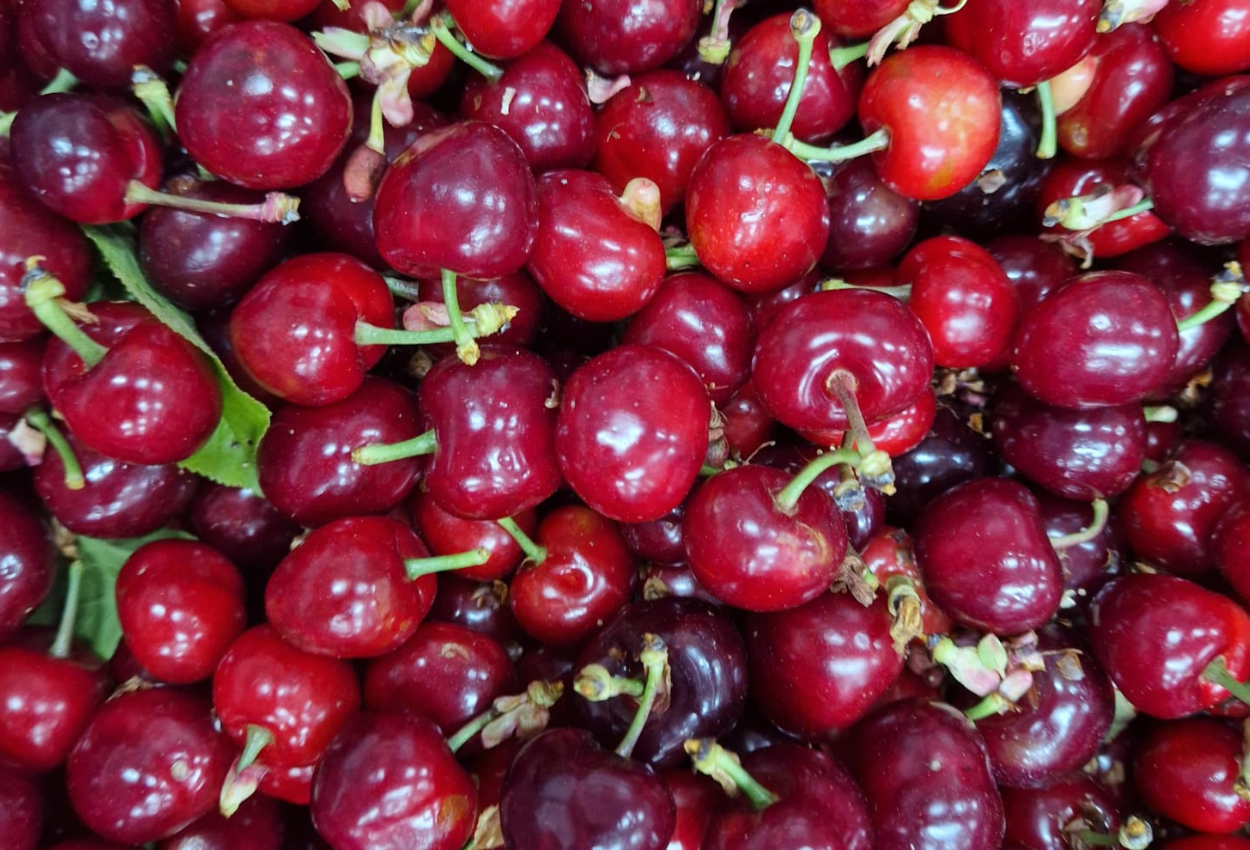
Cherries are small red gems that represent one of the most anticipated treasures of spring and summer. With over 50 commercial varieties of cherries adapted to Spain's diverse microclimates, these fruits not only delight our palates, but also cherries offer health benefits. In this article, we will explore the main cherry varieties you can find in Spain, their distinctive characteristics, and how to choose the best ones to enjoy all their flavor and properties.
But before we delve into this fascinating world of small red delights, remember that in our online store you can find the best seasonal fruits and vegetables and, of course, seasonal cherries grown using traditional methods and with great care.
What are the main cherry varieties in Spain?
Spain is one of the main cherry producers in Europe, with a varietal diversity that combines ancient tradition and agronomic innovation. Varieties are classified primarily by their ripening time, which allows these delicious fruits to be enjoyed for several months. Let's look at the main categories:
Early Varieties (May to early June)
These are the first to arrive on the market and mark the beginning of the cherry season. Although they may initially be a bit tart, their flavor sweetens as the season progresses.
- Burlat: Originally from France, it is the best-known and most widespread early variety. It has an intense red color, medium size, and fleshy taste. It is widely cultivated in Aragon and Catalonia, producing fruits weighing 7-10 grams with bright purple skin. Its average productivity is around 8-10 tons per hectare, although it is susceptible to cracking in rainy areas.
- Marvin (4-70): Developed in California, it competes in precocity with Burlat, ripening up to 3 days earlier in some areas. Its high chilling hour requirements (more than 900) have limited its presence in the southern Iberian Peninsula.
- Early Bigi: Very early ripening, it has good size and a balance between sweetness and acidity.
- Cristobalina: An early Spanish variety, ideal for warm climates due to its low chilling hour needs. Its fruits are medium and sweet.
Mid-season Varieties (June)
These cherries ripen approximately two weeks after the early varieties and are the most abundant in markets during the peak of the season.
- Summit: Noted for its large size (28-30 mm) and firmness (75-80 Shore D), it dominates European export markets. In Lleida, its cultivation accounts for 15% of the cherry growing area, with yields exceeding 12 tons per hectare. Its intense red color and excellent flavor make it highly appreciated.
- Van: Of Canadian origin, it has adapted exceptionally to the calcareous soils of La Rioja. It is a picota-type cherry, very productive and with a sweet flavor that has a slight acidic touch. Its cross-pollination with the Bing variety ensures fruit set of 85%.
- Starking: Of American origin, it has a dark red, almost black color and a generous size. Its balanced flavor makes it very popular in fruit shops.
- Bing: The most traditional and representative cherry in America, medium-sized and highly productive. It is highly valued for its intense sweet flavor and juicy flesh.
- Sunburst: Of Canadian origin, it stands out for its large size, small pit, and excellent flavor. It has good resistance to cracking.
At Campos del Abuelo, we carefully select the best mid-season varieties, ensuring they reach your table within 24 hours of harvest, thus preserving all their flavor and properties.
Late Varieties (June-July)
Late cherries are the last to arrive on the market. They are harvested between 20 and 27 days after Burlat and usually have a sweeter taste and greater resistance to damage.
- Lapins: Self-fertile and vigorous, it is the most planted cherry in the world. It produces fruits weighing 9-11 grams and soluble solids of 20%, ideal for industrial processes. Its large size, sweet flavor, and resistance to cracking make it very popular, although it is susceptible to brown rot.
- Regina: Introduced from Germany in the 1990s, it has gained ground in Extremadura. With a chilling cycle of 1200 hours and ripening 32 days after Burlat, it achieves prices 40% higher in Asian markets.
- Sweet Heart: Bright red in color and sweet in flavor, it is harvested at the end of the season. It is widely used in desserts and decorative dishes due to its attractive appearance.
- Napoleon: Of German origin and bicolor type (yellow with red blushes), it does not particularly stand out for its flavor but has high productivity. It is mainly used to make maraschino cherries and preserves.
Extra-late Varieties
These varieties extend the cherry season well into summer, allowing these fruits to be enjoyed when most others have disappeared from the market.
- Staccato: Self-fertile, with very late ripening and excellent preservation.
- Skeena: A very thick cherry with a round shape, garnet color, extreme firmness, and great taste quality.
- Extra-late: Large size and round shape, light red color, firm, and sweet taste. It can be found until early August.

Picotas: A Spanish Treasure with Denomination of Origin
Picotas are a special type of cherry that has a Protected Denomination of Origin (PDO) "Cereza del Jerte". Their most distinctive characteristic is that they have no stem, as during harvesting, the peduncle naturally detaches from the fruit, remaining attached to the tree.
The four varieties protected by the PDO Cereza del Jerte are:
- Ambrunés: Accounts for 30% of the PDO's production (3,400 tons annually). It has a distinctive sensory profile with 24% reducing sugars and 0.8% malic acid.
- Pico Negro: Stands out for its high anthocyanin content, reaching 450 mg/100g.
- Pico Limón: Sweet and refreshing taste.
- Pico Colorado: With a perfect balance between sweetness and acidity.
These varieties are characterized by their considerable size, round shape, and sweet, sometimes very sweet, flavor. Their season begins when most other cherry varieties start to disappear from the market.
What is the difference between morello cherries and cherries?
Although often confused, morello cherries and cherries are different fruits. A morello cherry is the fruit of the Prunus cerasus tree, a relative of the sweet cherry tree that is considered a wild cherry, a predecessor to the cultivated varieties we consume today.
Morello cherries are characterized by:
- More intense dark red color
- More acidic taste than sweet cherries
- Generally smaller size
- Mainly used in baking, preserves, and liqueurs
In Spain, morello cherries are not as appreciated for direct consumption as sweet cherries, but they are highly valued in the production of liqueurs such as pacharán, preserves in syrup, and as an ingredient in baking.
Agronomic Characteristics of Cherries
Cherry cultivation presents specific characteristics that directly influence the quality and availability of different varieties:
Climatic Requirements
The cherry tree requires specific conditions to thrive:
- Chilling hours: Depending on the variety, they need between 300 and 1,000 hours below 7°C. Varieties like Burlat are particularly sensitive to mild winters.
- Climate: They prefer temperate zones with cold winters and hot summers.
- Frost sensitivity: They are sensitive to late frosts that can damage flowering.
As Alexander, a local farmer, told us: "Climate change is causing irregularities in the climate, and that is especially noticeable in the lack of cold. Some varieties like Bourlette, which is French, no longer do well here. That's why we are looking for colder areas, or areas where the cherry ripens later."
Pollination and Self-fertility
A crucial aspect of cherry cultivation is pollination:
- Self-fertile varieties: Like Lapins, Sunburst, Sweetheart, Cristobalina, or New Star, can produce fruit without the need for other nearby varieties.
- Non-self-fertile varieties: Like Burlat, Starking, or Summit, require the presence of other compatible varieties for good pollination and production.
For non-self-fertile varieties, it is necessary to design plantations with at least 20% compatible pollinator trees and the presence of about 12 beehives per hectare to ensure fruit set rates above 70%.
Regarding new pollination methods, Alexander commented: "I don't like drones with lyophilized pollen. I don't use them and wouldn't, especially because you don't know where that pollen comes from. It could come from rival countries or even distant continents. And of course, if pollen from elsewhere comes in, what else could come with it?"
Resistance to Cracking
Cracking is one of the main problems in cherry cultivation, caused by rain during ripening. Varieties show different levels of resistance:
- High resistance: Lapins, Picota, Sweetheart, New Star
- Medium resistance: Starking, Summit, Compact Stella, Napoleon
- Low resistance: Burlat
This characteristic is especially important in areas with rainy springs, where cracking-resistant varieties can make the difference between a good harvest and significant losses.

Nutritional Properties and Benefits of Cherries
Cherries are not only delicious but also a true nutritional treasure with numerous health benefits:
Nutritional Composition
- Vitamins: Rich in vitamins A, C, and K
- Minerals: Provide potassium, magnesium, iron, and calcium
- Fiber: Contain a good amount of soluble and insoluble fiber
- Folic acid: Important for blood cell formation
- Antioxidants: Especially anthocyanins and ellagic acid
- Melatonin: Cherries are one of the few fruits that contain this natural hormone
With just 59 calories per 100 grams, cherries are a healthy option to include in any diet.
Health Benefits
The properties of cherries translate into numerous benefits:
- Anti-inflammatory effect: Thanks to anthocyanins, they help reduce inflammation and relieve muscle, joint, and tendon pain.
- Detoxifying properties: Promote the elimination of toxins and combat constipation.
- Improved sleep: Their melatonin content helps regulate sleep cycles.
- Cardiovascular protection: Reduce cholesterol and triglyceride levels in the blood.
- Antioxidant effect: Combat free radicals, helping to prevent cellular aging.
- Memory benefits: Specialists include them among the most beneficial foods for preventing memory loss.
You can discover more about the health benefits of cherries in our specialized blog.

How to Choose the Best Cherries?
To fully enjoy these delicious fruits, it's important to know how to choose them correctly:
Visual Aspects
- Size: Generally, larger cherries tend to have better texture and flavor.
- Color: Look for a uniform, bright color, characteristic of the variety (from light red to dark garnet).
- Stem: For varieties with stems, it should be green and fresh, not dry or wilted (except for picotas, which naturally don't have them).
- Appearance: No bruises, dents, or cracks.
Season and Origin Aspects
- Season: Cherries taste best when consumed in their optimal season.
- Origin: Preferably from local and sustainable producers, such as Campos del Abuelo, who guarantee freshness and respect for the environment.
- Certifications: Cherries with PDO or organic production usually offer a greater guarantee of quality.
At Campos del Abuelo, we select the best cherry varieties grown without post-harvest chemicals, ensuring they reach your table within 24 hours of harvest, thus preserving all their flavor and properties.
Current Challenges in Cherry Cultivation
Cherry cultivation faces various challenges that affect the availability and quality of different varieties:
Climate Change
IPCC models predict reductions of 22% in chilling hours by 2050 in some regions of Spain, which is forcing changes in cultivated varieties and production areas.
As Alexander, a local farmer, explained to us: "This year production has been a bit lower. We are looking for colder areas or where the cherry ripens later, because there these problems are not as noticeable."
Pests and Diseases
The main threats to cherry crops include:
- Drosophila suzukii: A recently appeared fly that causes serious damage to fruits.
- Ceratitis capitata (Mediterranean fruit fly): Especially problematic in late varieties.
- Monilia: A fungus that affects flowers and fruits, favored by humid conditions.
- Cracking: The cracking of fruits due to rain during ripening.
According to Alexander: "Right now, the biggest problems are caused by Ceratitis capitata and Drosophila suzukii. For Drosophila suzukii, which has recently appeared, we use products allowed in organic farming."
Varietal Innovation
Breeding programs such as IRTA-CReSA are developing new varieties that combine desirable characteristics such as resistance to drought, salinity, and pests, with excellent organoleptic qualities.
However, as Alexander pointed out: "New varieties come out constantly, but that's a risk for us. You need eight years to know if a variety does well in your land. So for now, we continue to work with the ones we know work."

Frequently Asked Questions about Cherry Varieties
What is the best cherry variety for direct consumption?
For direct consumption, Bing, Rainier, and Lapins varieties are considered among the best for their balance of sweetness, juiciness, and firmness. However, preferences may vary according to personal taste. Jerte picota cherries are also excellent for fresh consumption due to their intense sweet flavor.
Do cherries make you gain weight?
No, cherries are low in calories (approximately 50 kcal per 100 grams) and rich in fiber, which makes them satiating. In fact, they are one of the best fruits to include in weight control diets due to their purifying and diuretic effects that help combat fluid retention.
When is the best time to consume cherries in Spain?
The cherry season in Spain extends from early May to mid-July, depending on the varieties and regions. Early varieties begin in May, mid-season varieties dominate in June, and late varieties and picotas extend into July. To enjoy cherries with the best flavor, it is advisable to consume them in their optimal season.
Do cherries cause constipation?
No, cherries do not cause constipation. On the contrary, thanks to their fiber and organic acid content, they help improve intestinal transit, eliminate the feeling of bloating in the stomach, and promote digestion.
What is the difference between a cherry and a picota?
The main difference is that picotas do not have a stem (peduncle), as it remains attached to the tree during harvesting. Additionally, picotas are usually larger, darker in color, and sweeter than common cherries. Picotas are protected by the Jerte Cherry PDO and comprise four specific varieties: Ambrunés, Pico Negro, Pico Limón, and Pico Colorado.
Conclusion: The richness of Spanish cherry varieties
Spain boasts an extraordinary cherry varietal heritage, the result of centuries of agricultural tradition and recent innovation. From the early Burlat to the late Lapins, including the emblematic Jerte picota cherries, each variety offers unique characteristics that satisfy different tastes and needs.
The diversity of varieties allows fresh cherries to be enjoyed for several months, each with its own peculiarities in terms of flavor, size, color, and nutritional properties. Furthermore, their numerous health benefits make them a food that is as healthy as it is delicious.
At Campos del Abuelo, we are committed to offering you the best varieties of sustainably grown cherries, without post-harvest chemicals and with the guarantee that they will reach your table within 24 hours of being picked. Because we believe that enjoying the authentic taste of freshly picked cherries is an experience that everyone deserves to live.
Are you ready to discover the variety that best suits your tastes? Explore our selection of seasonal fruits and let yourself be surprised by nature's authentic flavor.


