
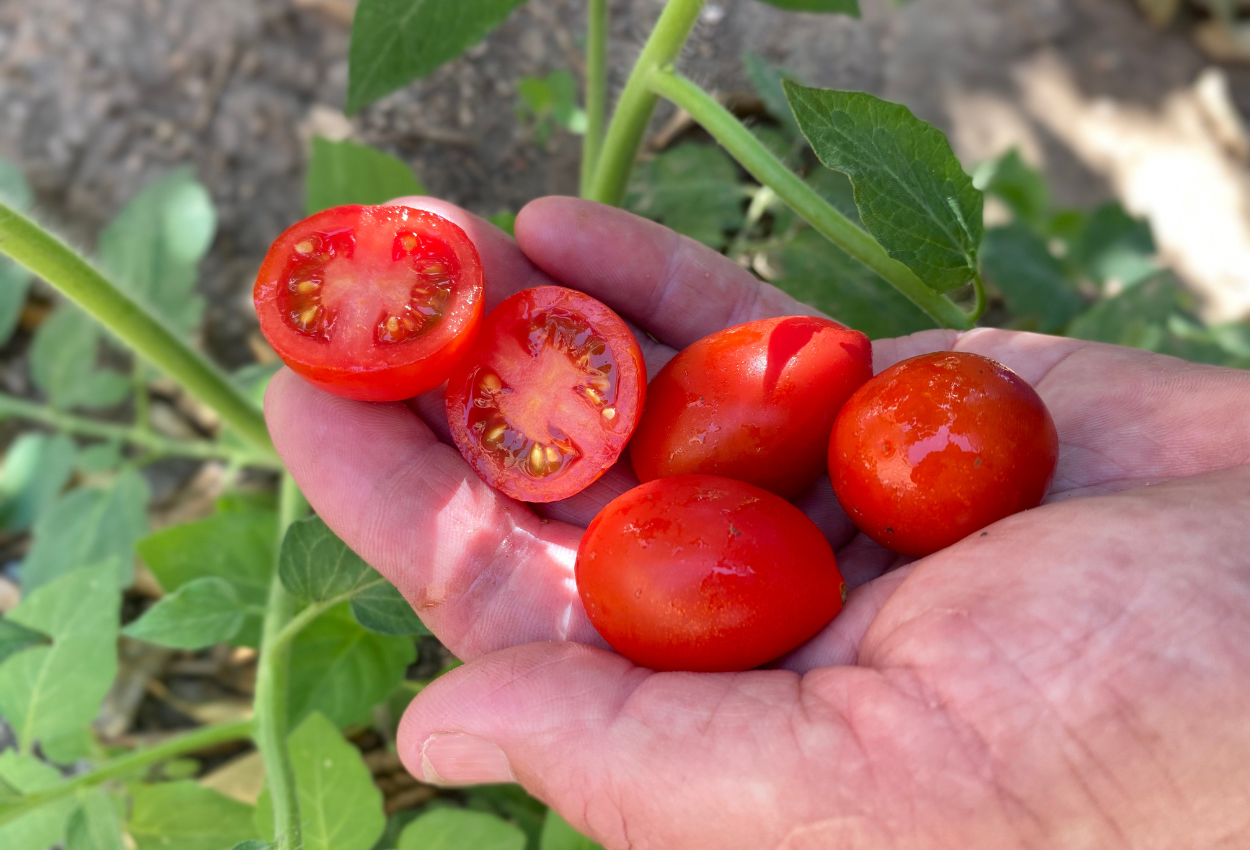
Tomato cultivation is one of the most rewarding adventures in the garden, but also one that generates the most questions. If you're thinking of growing your own tomatoes, this guide will take you step-by-step through everything you need to know to achieve those juicy, flavorful fruits we all seek.
Did you know that tomatoes arrived in Spain in the 16th century and were initially grown only as ornamental plants? People were afraid to eat them because they thought they were poisonous. Today, with a production exceeding 3.9 million tons annually, Spain is one of the main European producers. And best of all: you can be part of this history by growing your own tomatoes at home.
What are the ideal conditions for growing tomatoes?
Tomatoes are plants that love the Mediterranean sun, but they have their quirks. They need daytime temperatures between 20-25°C and nighttime temperatures of 15-18°C to develop perfectly. As a Valencian farmer we spoke with told us: "When the heat hits during full bloom, the tomatoes don't set well, and that leaves you with no production."
Humidity also plays a crucial role. The ideal range is between 60-80%. If you exceed 85%, prepare to see fungi like downy mildew appear, those yellow spots on the leaves that we fear so much. That's why in areas like Almería, they have perfected greenhouse cultivation, where they can control these conditions down to the millimeter.

As for soil, tomatoes are not too demanding, but they do appreciate loamy-clay soils with a pH between 6.0 and 6.5. A trick that works very well: add between 15-20 tons per hectare of composted manure. Your tomatoes will thank you with spectacular production.
When is the best time to plant tomatoes?
The answer depends a lot on where you live. In most of Spain, the ideal time is between April and June, when there is no longer a risk of frost. But be careful, because tomatoes are very sensitive to cold: below 12°C, the plant practically stops growing.
| Region | Sowing Time | Specifics |
|---|---|---|
| Andalusia | March-May | Possibility of 3 annual cycles in a greenhouse |
| Levante | April-June | Ideal for Valencian varieties |
| Central | May-June | Wait until late frosts have passed |
| North | May-July | Take advantage of the warmest months |
If you want to get a head start, you can start with seedbeds in February-March, always protecting them from the cold. Seedlings will be ready to transplant when they have 3-5 true leaves and are about 20 cm tall.
Tomato varieties: Which one to choose for your garden?
Here comes one of the most important (and fun) decisions in tomato cultivation. As that same farmer commented to us: "We cultivate varieties for their flavor, not their appearance. Native varieties, like the Valencian tomato, can be more challenging in the field, but the result is worth it."
Varieties are mainly divided into two groups:
Determinate tomatoes: These are more compact, perfect for pots or small spaces. They produce their entire crop at once. Cherry tomatoes are a perfect example.
Indeterminate tomatoes: These grow like vines and need stakes. They produce gradually throughout the season. This group includes varieties such as the beefsteak tomato or the famous RAF tomato.

Among the most popular varieties in Spain are:
- Muchamiel: Sweet-tart, resistant to high temperatures
- Rosa de Aragón: Up to 9.2% sugar, ideal for salads
- Montserrat: Characteristic ribbed shape, very fleshy
- Pera de Girona: Perfect for preserves and sauces
The art of watering in tomato cultivation
If there's one thing that can make the difference between a mediocre harvest and a spectacular one, it's irrigation. Tomatoes need regular watering but without waterlogging. A farmer explained it to us this way: "This year the rains have complicated everything for us: the excess water has caused the tomato plants to spoil faster and many tomatoes to crack prematurely."
The drip irrigation system is the most efficient, with emitters of 0.8-1.5 liters per hour. This method can increase your yield by 20-90% compared to traditional irrigation. In addition, you avoid wetting the leaves, which reduces the risk of fungal diseases.
A practical tip: keep the soil moisture between 20-40 kPa during fruit set. If it gets too dry, the dreaded blossom end rot will appear (those black spots at the base of the tomato).
Tomato nutrition: Feeding your plants
Tomatoes are greedy plants that need to be well-fed to produce quality fruit. The NPK (nitrogen-phosphorus-potassium) ratio should change according to the cultivation phase:
- From transplant to flowering: 1:1:1 ratio
- During fruiting: increase potassium (1:1:2)
- During ripening: maximum potassium (1:1:3)

Calcium deserves special mention. It is essential to prevent blossom end rot and improve fruit firmness. In calcareous soils in eastern Spain, this is usually not a problem, but in other areas, it may be necessary to add agricultural gypsum.
Pests and diseases: The enemies of the tomato
Here comes the less pleasant but inevitable part of cultivation. The Tuta absoluta (tomato leafminer) can destroy up to 80% of your crop if not controlled in time. At Campos del Abuelo, we have seen how Valencian farmers combine sex pheromones with releases of Nesidiocoris tenuis, reducing the use of insecticides by 70%.
| Pest/Disease | Symptoms | Ecological Control |
|---|---|---|
| Tomato leafminer (Tuta absoluta) | Galleries in leaves and fruits | Pheromones + natural predators |
| Downy mildew | Yellow spots on leaves | Ecological copper + good ventilation |
| Whitefly | Sticky leaves, yellowing | Potassium soap + chromatic traps |
| Spider mite | Yellow stippling on leaves | Wettable sulfur + biological control |
The Rugose virus (ToBRFV) is the new threat that worries Spanish producers. It can reduce yields by up to 70%, and for now, the best defense is resistant varieties like 'Lynna' or 'Titan F1'.
Cultivation techniques that make a difference
Staking is essential, especially for indeterminate varieties. Use bamboo stakes or corrugated steel bars (the latter prevent contact burns in summer). Tie the plants carefully, without strangling the stem.
Sucker pruning is another secret to getting quality tomatoes. Remove those shoots that grow in the leaf axils, but not all of them: leave some in case the main stem suffers a mishap.

Mulching is a technique that many overlook but can make a difference. A layer of straw or biodegradable plastic retains moisture, controls weeds, and prevents fruit from touching the ground.
The harvest: The most anticipated moment
After 60-100 days from transplanting (depending on the variety), the magical moment arrives. Tomatoes are ready when they develop their characteristic color but are still firm. Don't wait until they are completely soft on the plant.
A trick from Valencian farmers: harvest early in the morning, when the fruits are freshest and firmest. And never pull the tomato; gently twist it or use scissors to avoid damaging the plant.
To store them at home, simply keep them at room temperature if they are green, or in the refrigerator's vegetable drawer if they are already ripe.

Frequently asked questions about tomato cultivation
Why do my tomatoes crack before ripening?
This usually happens due to irregular watering or intense rains after dry periods. The tomato absorbs water quickly and the skin cannot stretch enough. Maintain consistent watering and pick tomatoes before heavy rains if possible.
Is it better to grow tomatoes in a greenhouse or outdoors?
It depends on your goals. As a farmer told us: "We opt for open-field cultivation, without plastic. The tomato grows at its own pace and is tastier, although production can vary from year to year." A greenhouse gives you more control but requires more investment.
How many kilograms does a tomato plant produce?
A well-cared-for plant can produce between 2-5 kg in traditional cultivation. In greenhouses with advanced technology, up to 15 kg per plant can be achieved, although the flavor may suffer if production is forced too much.
Can I grow tomatoes in pots?
Of course! Choose pots of at least 20-30 liters for determinate varieties. Cherry and other compact varieties are ideal. Make sure they have good drainage and use quality substrate enriched with compost.
What do I do if black spots appear at the base of my tomatoes?
This is blossom end rot, caused by a lack of calcium or irregular watering. Add calcium to the soil (crushed eggshells work) and maintain constant moisture. In areas with very soft water, it may be necessary to supplement with calcium regularly.
The future of tomato cultivation in Spain
Tomato cultivation in Spain is undergoing a transformation. Production has fallen by 18.83% in the last decade, while countries like Morocco have increased theirs. But this is also an opportunity to bet on quality over quantity.
The greenhouses of the future are already here: in Almería, pioneering projects combine photovoltaic solar energy with horticultural production, reducing the carbon footprint to 1.2 kg CO₂ per kilo of tomato. Precision agriculture, with sensors that adjust irrigation in real-time, allows for water savings of up to 30%.
And most importantly: more and more consumers value the authentic taste of tomatoes. As our interviewed farmer reflected: "If the consumer tries a tomato that tastes like a tomato, they remember it." That's why in our selection of tomatoes we always prioritize varieties with the best flavor, grown respecting natural timings.
Growing tomatoes is much more than planting and harvesting. It's connecting with the land, understanding the rhythms of nature, and, above all, enjoying the incomparable taste of a sun-ripened tomato from your own garden. With patience, observation, and the tips in this guide, you'll soon be savoring your own tomatoes, the kind that taste like they used to.
Are you encouraged to start your own tomato cultivation? At Campos del Abuelo, we have been supporting farmers for years who, like you, seek to recover the authentic taste of tomatoes. Because in the end, that's what it's all about: rediscovering true flavors, those that transport us to grandpa's garden.


