
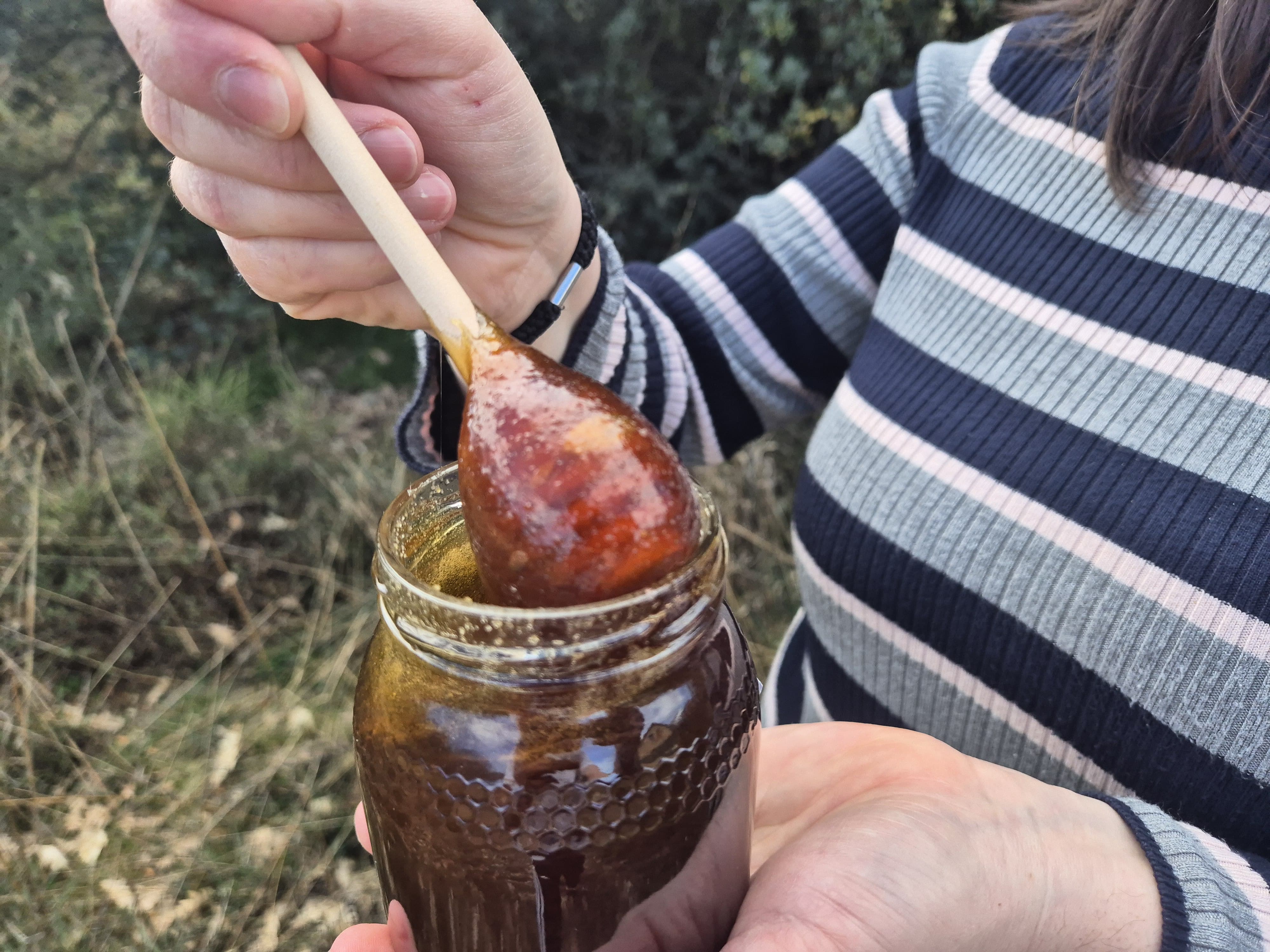
Honey is one of the oldest and most valuable foods nature offers us. This sweet nectar, meticulously crafted by bees, not only sweetens our lives but also provides numerous health benefits thanks to its extraordinary nutritional composition. Since ancient times, cultures like the Egyptian incorporated it into various medicinal practices, and its use has endured to this day for good reason.
What exactly is honey and how is it produced?
Honey is a viscous, sweet substance produced by bees of the genus Apis mellifera from flower nectar or secretions from living plant parts. Bees collect the nectar, transform it by mixing it with their own enzymes, and store it in the honeycomb where, after a maturation process, this wonderful product is obtained.
The production process is fascinating: bees store the best of the flowers for themselves, concentrating the most important sugars, amino acids, and minerals from the plants in the nectar. Once regurgitated by the bees into the hive, the nectar undergoes a process that refines and concentrates it, turning it into an energy and nutritional reserve for the colony.
The most interesting thing is that, depending on the flowers bees visit, honey can have different colors, aromas, and specific medicinal properties.
Nutritional composition: What makes honey so special?
The nutritional richness of honey is truly astonishing. One tablespoon (approximately 21 grams) contains:
- 64 calories
- 17 grams of natural sugars (fructose, glucose, maltose, and sucrose)
- B vitamins (B1, B2, B3, B5, B6), C, D, and E
- Minerals such as calcium, copper, iron, magnesium, manganese, zinc, phosphorus, and potassium
- Essential amino acids
- Beneficial enzymes
- Antioxidants (flavonoids and phenolic compounds)
According to analyses of Spanish varieties such as rosemary and chestnut honey, honey contains 22 amino acids, 27 minerals, and over 5,000 enzymes, crucial components for numerous metabolic functions in our body.
An interesting fact: darker honeys, like heather or forest honey, tend to contain a higher amount of antioxidant elements and medicinal properties, as confirmed by Raquel, a beekeeper with years of experience: "The darker a honey is, the more antioxidant and medicinal properties it has. That's very noticeable."

Honey benefits for cardiovascular health
One of the most studied aspects of honey is its positive impact on heart health. Recent research shows that regular honey consumption is associated with significant improvements in key cardiovascular parameters:
- Reduces LDL cholesterol (bad) by approximately 11%
- Decreases triglycerides by 13%
- Increases HDL cholesterol (good) by 8%
- Helps dilate heart arteries, improving blood flow
- Prevents clot formation
- Protects the heart from oxidative stress
In Spain, varieties like forest honey and eucalyptus honey stand out for their high concentration of polyphenols, which improve vascular elasticity and can reduce blood pressure. A clinical trial conducted in Andalusia with hypertensive patients showed a 5 mmHg decrease in systolic pressure after eight weeks of daily consumption of 20g of rosemary honey.
Honey as an ally for liver and metabolism
The liver, that great laboratory of our body, also benefits considerably from the properties of honey. Recent scientific studies reveal that its daily consumption can:
- Reduce alanine aminotransferase (ALT) by 18%, a key marker of liver damage
- Decrease fat accumulation in patients with non-alcoholic fatty liver
- Regulate fasting glucose (12% reduction according to recent data)
- Stimulate bile production, facilitating lipid digestion
Orange blossom honey, common in Valencia, contains balsamic compounds that particularly benefit liver function. Meanwhile, dark varieties like buckwheat honey have a lower glycemic index compared to light honeys, making them more suitable for people with glucose sensitivity.
Raquel, a beekeeper who produces from the mountains of León, shares her experience: "Honey produces glycogen in the liver, which is the energy reserve the brain needs for its normal functioning. Many clients tell me that since they started consuming honey regularly, they feel more energetic."
| Type of honey | Main benefit for metabolism | Best time for consumption |
|---|---|---|
| Rosemary honey | Promotes liver function | Morning, on an empty stomach |
| Orange blossom honey | Stimulates bile production | After heavy meals |
| Heather honey | Rich in iron, ideal for anemia | Mid-morning |
| Dark honey (forest) | Blood sugar regulation |
Before physical exercise |

Antimicrobial properties and immune system strengthening
Raw Spanish honey, being unpasteurized, retains enzymes like glucose oxidase, which generates hydrogen peroxide, a natural antibacterial agent. In vitro tests conducted at the University of Madrid confirmed its efficacy against strains of Staphylococcus aureus and Escherichia coli, even when compared to conventional antibiotics.
During flu and cold season, consuming thyme honey, rich in thymol, is associated with a 30% reduction in the incidence of respiratory infections. This is due to its:
- Antibacterial
- Antiviral
- Antifungal
- Anti-inflammatory properties
As Raquel tells us from her apiaries: "Some people tell me that since they started taking honey regularly, they don't get as many colds, or that they use it for their throat and it works very well. In winter, I take a mixture of honey with propolis, and for spring-summer, with pollen."
Honey in wound and skin condition treatment
One of the oldest and most effective uses of honey is its topical application for the treatment of wounds, burns, and skin problems. Its density and antibacterial properties help prevent infections and accelerate healing through several mechanisms:
- Deprives microorganisms of moisture
- Acts as a chelating agent
- Releases hydrogen peroxide that breaks bacterial membranes
- Reduces skin pH between 3.2 and 4.5, creating a hostile environment for pathogens
- Maintains a moist environment that promotes tissue regeneration
Honey has proven effective in:
- Burns and partial skin lesions
- Treatment of diabetic ulcers, even in severe cases
- Skin problems such as acne, hemorrhoids, herpes, or psoriasis
- Dry or chapped lips
In the medical field, it has been observed that "the use of honey during radiation therapy for oral cancer helps prevent some of the most serious side effects of mucositis", which is the inflammation of the oral mucosa.
Digestive benefits and gut health
Honey offers numerous benefits for our digestive system thanks to its natural enzymes that facilitate nutrient absorption and its prebiotic properties that promote a healthy gut microbiota:
- Contains fructooligosaccharides (FOS) that increase stool volume and stimulate intestinal movement
- Feeds beneficial colon bacteria
- Helps prevent gastrointestinal disorders such as diarrhea
- Reduces recovery time in patients with gastroenteritis
- Acts against gastritis and peptic ulcers
- Helps soothe pain in liver and pancreas diseases
According to Raquel: "Some people have told me they take it in the mornings on an empty stomach because it helps them regulate, even for bowel movements. One client told me it helped her with digestion."
Honey for mental and neurological health
A lesser-known but fascinating aspect of honey is its positive impact on the central nervous system. Recent research suggests that polyphenol compounds present in honey, such as apigenin, caffeic acid, chrysin, ellagic acid, and quercetin, contribute to neurological health in several ways:
- Assists in the formation and development of the central nervous system
- Improves memory and cognitive growth
- Reduces anxiety
- Optimizes intellectual performance
- Promotes restful sleep
Orange blossom honey, for example, has sedative and sleep-inducing effects. As Raquel tells us: "A spoonful of honey with a glass of warm milk before bed helps promote restful sleep. I've also been told that since they started taking honey at night, they sleep better."
Honey consumption before sleep stimulates glycogen storage in the liver and promotes the secretion of melatonin, the sleep hormone, which explains its beneficial effect on rest.

Varieties of Spanish honey and their specific applications
Spain, thanks to its rich floral biodiversity, produces a wide variety of honeys with unique properties. Each type has specific applications depending on its characteristics:
| Variety | Main origin | Characteristics | Specific benefits |
|---|---|---|---|
| Rosemary honey | Andalusia and Murcia | Light amber color, herbal aroma | Tonic, expectorant, promotes liver function |
| Chestnut honey | Asturias and Cantabria | Dark, mineralized, intense flavor | Rich in zinc and magnesium, strengthens the urinary system |
| Eucalyptus honey | Galicia | Menthol notes | Effective for bronchitis and sinusitis, reduces nasal congestion |
| Orange blossom honey | Valencia | Soft, aromatic | Sedative, sleep-inducing, digestive |
| Thyme honey | Mediterranean areas | Rich in thymol | Antiseptic, digestive, strengthens the immune system |
| Heather honey | Northern Spain | Dark, rapid crystallization | Rich in iron, ideal for anemia |
| Forest honey | Forest areas | Very dark, less sweet | Ideal for asthma and bronchitis, high in antioxidants |
As Raquel explains from her experience: "Each variety has its own. Chestnut honey has a strong flavor and properties that many people value for the circulatory system. Lavender honey is softer and more relaxing. It's important to vary according to the variety."
How to choose and consume honey to maximize its benefits?
To make the most of honey's properties, it's essential to know how to choose and consume it correctly:
1. Choose raw, local honey
Raw honey is honey that has not been heated above 43°C or subjected to any industrial process. By not being pasteurized, it retains all its enzymes, antioxidants, and beneficial properties. As our fellow beekeeper Raquel explains: "When honey is processed by humans through pasteurization, it prevents crystallization, but it also drastically reduces its properties, as most enzymes and antioxidants are destroyed in the process."
Buying honey from local beekeepers guarantees its purity and freshness. Additionally, local honey contains pollen from plants in your area, which can help reduce seasonal allergies.
2. Observe color and crystallization
The color of honey varies according to its floral origin and can be an indicator of its properties:
- Light honeys (rosemary, orange blossom): tend to be softer and more aromatic
- Dark honeys (forest, heather, chestnut): generally richer in minerals and antioxidants
Crystallization is a natural process that does not affect quality. In fact, it is a sign of purity: "Crystallized honey is good because it is its natural process."
3. Dosage and optimal consumption time
According to experts, it is not necessary to consume large amounts of honey to benefit from its properties:
- A teaspoon (5-10g) daily is sufficient as a nutritional supplement
- On an empty stomach: to stimulate metabolism and provide energy
- Before bedtime: to promote rest, especially with orange blossom or lavender honey
- After training: to quickly recover energy
Raquel recommends: "Take a teaspoon on an empty stomach, first thing in the morning, directly or dissolved in a glass of warm water. It's a very natural way to start the day, and many people tell me it makes them feel great."
4. Enhancing combinations
Honey can be combined with other ingredients to enhance its effects:
- With lemon: reinforces its antibacterial properties, ideal for colds
- With cinnamon: enhances its metabolic and anti-inflammatory effects
- With propolis: increases its immunological properties, especially in winter
- With pollen: complements its nutritional profile, ideal in spring
- With warm milk: promotes restful sleep
Precautions and important considerations
Although honey is generally safe and beneficial, there are some important precautions to keep in mind:
- Do not administer to children under one year of age: Honey can contain Clostridium botulinum spores that, although harmless to adults, can cause infant botulism in babies
- Moderate consumption in diabetics: Although it has a lower glycemic index than sugar, it is still a sweetener that should be consumed in moderation
- Possible allergies: Some people may be sensitive or allergic to specific components of honey, particularly pollen
- Variable quality: Benefits may vary depending on the origin, processing, and purity of the honey
It is important to remember that, although honey has medicinal properties, it should not replace conventional medical treatments for serious conditions.
Honey in cooking: beyond the sweetener
Honey is not only a natural sweetener, but also a versatile ingredient in the kitchen that can enrich numerous dishes:
- As a sugar substitute in baking (use ¾ cup of honey for every cup of sugar)
- In marinades for meats, adding flavor and helping them caramelize
- In salad dressings, combined with olive oil and vinegar
- To enhance the flavor of cheeses, especially aged ones
- In infusions and hot drinks
- As a complement to yogurts and fresh fruits
When cooking with honey, it is advisable to reduce the oven temperature by about 15°C, as it tends to brown more quickly than sugar.

Frequently asked questions about the benefits of honey
Is honey really better than sugar for people with diabetes?
Although honey contains sugars, its balanced combination of fructose and glucose allows for more gradual absorption, preventing abrupt insulin spikes. Recent studies indicate that it can increase insulin sensitivity and support pancreatic function. However, it remains a sweetener that should be consumed in moderation by diabetics, preferably under medical supervision.
Do all honeys have the same medicinal properties?
No, the properties vary significantly depending on the floral origin. As a beekeeper explains: "Monofloral honeys, like lavender honey, which are very trendy right now, don't provide as many nutrients as forest or heather honeys. It's as if the bees were always eating the same thing: they lack properties." Dark honeys are generally richer in antioxidants and bioactive compounds.
Does crystallized honey lose its properties?
On the contrary, crystallization is a natural process that indicates purity. It does not affect the nutritional or therapeutic properties of honey. In fact, some varieties crystallize more quickly than others due to their natural sugar composition.
Can local honey help with seasonal allergies?
There is anecdotal evidence that consuming local honey two months before allergy season can help regulate the immune response to local pollen. This is because it contains small amounts of the same pollen that causes allergies, acting as a form of natural immunotherapy. However, scientific studies on this are limited.
How much honey can be safely consumed daily?
Experts recommend between one teaspoon and one tablespoon daily (5-15g) to obtain benefits without exceeding the recommended intake of added sugars. As Raquel indicates: "You don't need to consume a lot. A teaspoon a day is enough to notice effects, as long as it's raw and untreated honey."
Conclusion: Honey, a natural treasure for our well-being
Honey is much more than a simple natural sweetener. This extraordinary bee product represents an authentic nutritional treasure with benefits ranging from cardiovascular health to strengthening the immune system, as well as liver protection, digestive improvement, and skin care.
The key to maximizing its properties is to choose raw honeys, preferably local and from beekeepers who respect natural processes. As Raquel reminds us: "A honey that has gone through a thousand processes is not the same as one that goes from the comb to the jar."
In a world where we increasingly value what is natural and authentic, honey is presented as an ancestral food that has stood the test of time, demonstrating that nature, in its wisdom, offers us comprehensive solutions for our well-being.
If you haven't yet incorporated honey into your daily diet, perhaps now is the time to do so. And if you already enjoy its benefits, consider exploring different varieties to discover the full spectrum of properties this wonderful product can offer you. At Campos del Abuelo you will find artisanal honeys of the highest quality, produced with respect for nature and bees, so you can enjoy all the benefits this golden treasure has to offer.


