
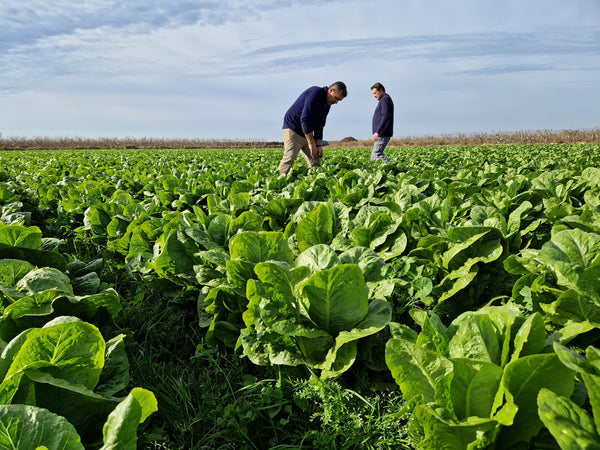

The Valencian oranges from Campos del Abuelo come from a family with a long tradition in citrus farming. But let's be honest: famous or not, they come with a peel just like any other orange in the world.
In this article we'll share three ways you can use the peel from your oranges so it doesn't just end up as waste. Let's get to it.
The peel makes up almost 20% of the orange, and it's a part we usually throw away without knowing everything it can be used for.
In the old days it was used for its medicinal benefits in infusions and essential oil extracts, but, like other citrus fruits, it has also been used as a repellent, since it contains a substance (limonene) that insects really don't like.
Of course, there are other ways to make the most of orange peels, but we want to show you a few unusual ones.
Remember, it's really important to use oranges straight from the farmer that are top quality, with no chemical residues. At Campos del Abuelo we hold the Global GAP certificate and our fruit is completely zero residue. Very few growers have this certificate, because it guarantees very demanding quality standards.

What makes orange peel so good?
Orange peel is basically made up of 25% pectins, 23% sugar, 22% cellulose and 11% hemicellulose, plus other low-molecular-weight compounds such as limonene.
According to the National Library of Medicine (NIH), in industry the main uses of orange peel are: livestock feed, extraction of essential oil and/or limonene, and extraction of pectin (a natural thickener).
But we're going to show you other ways to use the orange peel you have at home, so you get the most out of our fruit.
Let's go!

Where can we use orange peel?
Besides its usual uses in baking, essential oils or as a repellent, orange peel can also be used as a cleaner or as a natural fire starter.
And there's another little-known use that will surprise you. Stick around until the end to find out.

Natural all-purpose cleaner
A really easy way to use orange peels, and the peel of other citrus fruits too, is with this all-purpose cleaner.
It'll help you remove grease and built-up grime from kitchen taps, and you can also use it to clean the bathroom.
Want to know how to make it? It's really easy.

In a glass jar, keep adding the citrus peels you have left over at home. You can add them with the pulp or clean them and use just the peel. When the jar is full, fill it halfway with white vinegar and the other half with water.
Store the jar without closing it completely, in a cool place away from direct light, for about a month. After that time, strain it and you'll have your natural all-purpose cleaner.
All that's left is to pour it into a spray bottle and it's ready to use.
Lighting the barbecue or fireplace
Here's the perfect substitute for barbecue firelighters. We can light both the fireplace and the barbecue without chemicals, while making use of orange peel that would otherwise have ended up in the bin.

Want to learn how? You'll see how easy it is.
Let's start!
First, we need to get the orange peel. To do this, peel the oranges, avoiding the white part as much as possible.
You can use a peeler to get the peel in strips with less albedo (the white part of the orange).

Second, we need to dry the orange peel. You can do this by leaving it in the sun for 3-7 days depending on the weather, but if there isn't enough sun or you're caught in a storm right now, don't worry, you can also do it in the oven.

Put the orange peels on the tray at your oven's lowest temperature (usually 90 degrees) for about an hour, though it all depends on your oven. Keep checking on them. Let them cool before using them.
Now you can use them.
You can make peel "skewers" by threading together 4 or 5 pieces so they last longer and the flame catches well. Make them right when you take them out of the oven; afterwards the peel hardens and will break.
Natural bird feeder.
And last but not least, we have a little-known way to make use of orange peels: making a biodegradable bird feeder.

It's very versatile: you can hang it on any branch, enjoy visits from all kinds of birds, and it can last up to 2 weeks.
Over time the peel starts to break down. When that happens you can swap the peel, using the same skewer sticks and the same string, so we reuse the materials for quite a while.

To make the feeder you'll need:
-One orange from Campos del Abuelo.
-2 skewer sticks
-String
-Birdseed
HOW TO MAKE IT
Cut the orange in half.
Scoop out the pulp and leave just the peel, completely clean.
Push a skewer stick through the orange from one side to the other. Do the same with the other stick to form a cross. Make sure it's not too close to the edge so the peel doesn't tear.

Cut two pieces of string about 30 cm long and tie them to the ends of the same stick.
Add the birdseed and you're done.
Hang it wherever you like best.

And that's it for today's ideas. We bet you didn't know this one, right? We hope you found this useful.
Want to buy freshly picked Valencian oranges?

If you know other ways to use orange peel and want to share them with us, drop us a line in the comments.


Comments
Vaya parece muy interesante, yo solo lo sabia hacer en té. Ahora ya se como más puedo ocupar las cáscaras de naranja. Gracias
Se corta en tiritas, muy fina, cáscaras de limón, naranja y pomelo. Se las coloca en una cazuela con azúcar y el agua debe cubrir un poco más. Ahora a fuego suave cocer.
Sale un dulce riquísimo. Así lo hacía mi madre.
Es muy interesante y útil la información