
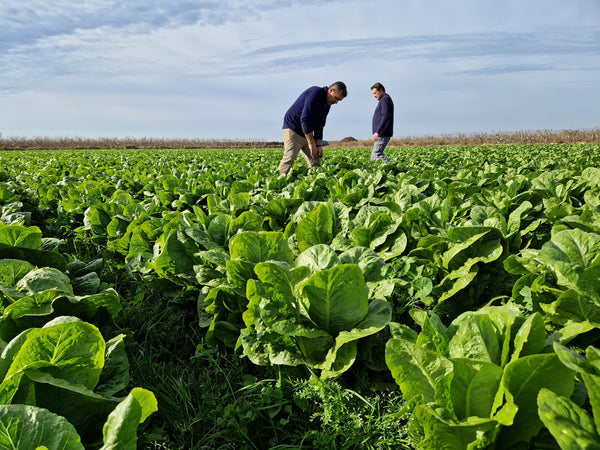

The harvest of cherries in Spain runs mainly from late April to July, varying by variety, altitude and climate. The key moment is picking only when the fruit reaches its peak, because cherries don't improve once they leave the tree and every hour counts for freshness.
If you're looking for clean, honest fruit with real flavour, here you'll find out how we work and what to expect during the season. We'll talk about dates, techniques, quality, post-harvest, sustainability, and also culture and agritourism. Everything you need to enjoy this red gem with know-how and confidence.

Cherry harvest calendar in Spain 2026
In Spain, the harvest window opens in warm areas from late April and stretches into July in mountain valleys. Aragón, Jerte, Murcia, Catalonia, mountain Alicante and Castilla y León stagger supply by combining early, mid-season and late cherry varieties, keeping the season going without losing quality.
Spain ranks among the world's six largest producers, with Aragón leading the country in both area and volume. Its patchwork of microclimates means excellent cherries can reach the market for weeks on end, something consumers appreciate and international markets already value with attention and price. That diversity is a real treasure for planning harvests and sales.
Altitude makes all the difference. The same crop can come in up to two weeks earlier or later between a low-lying farm and a high one. In Jerte, for example, the first certified batches are usually Navalinda with the stem on, while the famous picotas, which come away from the stem on their own, arrive a little later and are an icon of origin.
To help you get your bearings, here's a rough calendar by area and altitude. It's a practical guide to help you plan purchases and trips to the countryside without missing the best of each valley.
| Area | Typical altitude | Harvest window | Notes |
|---|---|---|---|
| Murcia and warm areas | 200 to 500 m | Late April to May | First early batches, in high demand for their earliness |
| Lower Aragón, Caspe and middle valley | 300 to 600 m | May to June | Great varietal diversity and weight in the national market |
| Jerte Valley lower areas | 400 to 700 m | Mid-May to June | Starts with Navalinda with stem, followed by picotas |
| Mountain Alicante | 500 to 900 m | Late May to July | Big day-night temperature contrast that concentrates sweetness |
| Middle and upper Aragón | 600 to 900 m | June to early July | Large sizes and steady supply thanks to its scale |
| Castilla y León late valleys | 700 to 1,000 m | Late June to July | Final stretch of the season, very sweet fruit |
Industry reference sources confirm this Mediterranean pattern staggered by altitude and variety in Spain and neighbouring countries. You can dig deeper into the global calendar and the Jerte season in this Cereza del Jerte guide and into Spain's position among the big producers in these comparative statistics. Aragón is consolidating its lead in area and production, as shown in this specialist report.

Testimony from Sujan, cherry farmer
Our production is in Alicante. We decide the harvest sequence mainly by the altitude and climate conditions of each farm. We always start with the lowest farm, at around 500 metres, where there are more hours of sun and higher temperatures. The farms between 850 and 925 metres ripen later because of the differences in temperature and exposure.
This difference means that the same variety can be picked about fifteen days apart from one farm to another. Let me give you an example: a variety we've already picked on the lowest farm can take around two more weeks to be ready on the highest one.
So, when deciding when to start harvesting, we always look for the optimal ripeness point. For that we use a cherry colour chart, and we consider the right moment to be when the fruit reaches levels 4 or 5 on that scale. When we see that colour, we harvest.
The weather also plays a part. When temperatures are mild, ripening is more gradual and we can organise the harvest passes better. But when a heatwave arrives, the fruit can ripen very fast and it gets harder to pick the whole crop at its best.
When is a cherry ready to be harvested?
The cherry is a non-climacteric fruit, so it doesn't keep ripening after picking. It's harvested when the colour is even, the firmness holds up to the touch without being hard, the stem looks green and the sweetness measured in Brix is in the ideal range for each cherry variety.
For fresh-market batches, except picotas, the aim is to keep the stem attached, which looks better and reduces juice loss. With Jerte picotas, the stem comes away naturally and is part of their identity, protected by the Protected Designation of Origin (PDO). You can check the size and category requirements in the PDO technical specification, a true benchmark of quality.
A field tip that never fails: pick early in the morning. The night-time cool keeps the flesh firmer, slows the fruit's respiration and gives you a little margin to move it into shade or cold storage without losing life.
- Colour true to the variety, with no dull patches.
- Firmness that gives just enough, without softness.
- Stem green, plump and well attached.
- Sweetness measured in Brix according to cultivar.
Harvesting techniques: expert hands and solutions for industry
Harvesting for the fresh market is still done by hand in Spain. Tree by tree and fruit by fruit, selecting in passes and placing them carefully in buckets or field crates, without pulling the stem or scratching the skin. This way of working explains that feeling of living fruit you notice in every bite.
For industry, some farms use trunk shakers with catching umbrellas. It's a useful system for canning and jams, where the look of the stem matters less. You can see a technical example of mechanised harvesting in this Innovagri sheet and illustrative field videos in this demonstration. For fresh fruit, skilled hands are still key.
Before harvest, nutritional tools are used to even out colour without hormones, concentrate passes and reach the market sooner. On colouring and ripening in cherry trees, you might find this reference technical note on colour management interesting. Applied well, they help fine-tune calendars.

From the tree to you: fewer hands, more freshness
At our place we believe in minimal handling. What leaves the farm must keep its freshness and natural shine. Fewer hands, fewer knocks, fewer hours in the heat. That's how we stand up for honest flavour, firm fruit that holds up all the way to your table and, above all, cherries that keep their benefits.
Testimony from Sujan, cherry farmer
At Campos del Abuelo, cherries are picked at their optimal ripeness and go straight from the field to the customer. The fruit is delivered just as it comes off the tree, with as little handling as possible.
In our experience, cherries should be eaten as fresh as possible, and the less they're handled, the better they keep their looks and qualities. That's why we particularly value direct sales channels from the farm.
Besides this route, we also work with supermarkets and export. In those cases, the cherries go through a sizing machine that photographs each fruit to classify it by size and colour, then sends it to different sorting lines.
If you'd like to dig deeper into how we choose varieties and plan, you'll enjoy our thoughts on putting flavour before volume in producing less, even if it sounds crazy. It's the cleanest way to look after the fruit and whoever eats it.
Post-harvest handling, cold and packaging that really protect
Once picked, the enemy has a name: heat, dehydration and knocks. The answer is to pre-cool fast, sort carefully, pack with protection and keep a steady cold chain close to zero to two degrees with high humidity. Every well-managed minute extends shelf life.
- Sorting by size, colour and defects with advanced machine vision that improves selection, as noted in the technical literature.
- Packaging that's rigid, ventilated and with cushioning cells, as recommended by specialists in cherry solutions.
- Cold that's continuous, with high humidity to slow respiration and fungi. At home, store them unwashed and wash them just before eating; a handy guide here on freezing and storage.
If you want to brush up on health and eating, there's a good summary on our blog about the health benefits of cherries. Eating well and storing better go hand in hand.

How does the harvest adapt to a changing climate and available water?
Recent seasons have brought milder winters and long summers. Fewer chill hours shift flowering and fruit set, and water is a resource to be treated with care. That's why controlled deficit irrigation is gaining ground, along with digital tools that let us water just enough, at the right time, for each tree.
In Mediterranean reference trials, irrigating to cover a percentage of post-harvest needs saves thousands of litres per hectare without hurting yield or quality. Here's a technical analysis of water savings in cherry orchards on controlled deficit irrigation. On top of that, smart irrigation using internet-connected sensors controlled remotely is helping make better use of every drop, as this case study on irrigation digitalisation shows.
At the same time, integrated management and biological solutions reduce residues and protect pollinators. The key is to combine pruning that lets air through, monitoring, traps, biocontrol and selective treatments, drawing on technical advice such as bioprotection in cherry trees and safe flowering. Real sustainability for high-altitude cherries.
Plant health and climate risks: what to watch out for
Monilinia, shot hole and cherry fruit fly are the names nobody wants to hear as harvest approaches. Pruning that lets air in, removing mummified fruit, monitoring flights and acting only when needed makes a big difference to sellable kilos and to quality.
- Monilinia and rots: remove sources and protect during flowering and pre-harvest using integrated management criteria.
- Shot hole: protect at sensitive growth stages, keep the canopy airy to reduce prolonged humidity.
- Fruit fly: check from a month before harvest, set traps and act when the threshold requires it; guidelines in cherry biocontrol.
Rain just before picking encourages cracking. Avoiding over-watering at the end and adjusting crop load helps keep fruit swelling in check. Protecting pollinators is both mandatory and common sense: plan applications outside bee activity and check compatibilities; updated guidance in pollination and regulations. Prevention always works out cheaper.

Quality, origin and culture: the identity of our cherries
The Cereza del Jerte PDO sets a high bar for size, texture and sweetness, and distinguishes Navalinda with stem from picotas, which are picked without it. It's an example of how a territory becomes a brand and the brand protects the territory. Learn more on this sustainability page.
Cherry culture is also something to celebrate. In 2026, the Cerecera returns with weekends of routes, tastings, a fair and cherry cooking. The cherry fair is scheduled for 30 May in Piornal, and there are picking agritourism activities designed for families. The programme is updated on this events site. A lovely plan to enjoy the countryside at a slow pace.
If you'd like to keep reading about varieties and techniques, check out our cherry varieties guide and our guide to growing cherries in Spain. We help you tell origins, sizes and timings apart with clarity.
Market and prices: why they change so much from week to week
Price follows supply. At the start of the season it rises due to scarcity and novelty, then eases in mid-June and tightens again in the final stretch, when only late pockets remain. Large size, shiny skin and a fresh stem push the price up with real force.
Spain competes well in the northern hemisphere on quality and timing. In recent years its export drive has grown and new destinations have opened up beyond the European Union. You can get a global perspective with the comparative data from Atlas Big and on the role of Spain and Aragón in this market analysis. Standing out through origin and sustainability is becoming ever more decisive.
Good practices for a high-quality cherry harvest
Excellence starts months before the first pick. Thoughtful cherry tree pruning, timely thinning, irrigation that balances size and flavour, and a harvest plan with well-measured passes. The safety of crews and visitors counts as much as the sweetness of the fruit.
| Stage | Good practice | Quality key |
|---|---|---|
| Flowering and fruit set | Balanced nutrition and respect for pollinators | More fruit and even fruit set |
| Fruit growth | Tailored irrigation and crop load control | Large size and lower risk of cracking |
| Pre-harvest | Even colouring and pass planning | Concentrated batches and entry into better windows |
| Harvest | Pick in the morning and handle gently | More firmness and fewer losses |
| Post-harvest | Fast pre-cooling, suitable packaging, traceability | Longer shelf life and trust |
To brush up on picking techniques, ventilated containers, not overloading crates and harvesting early, this practical guide for Mediterranean climates sums up the essentials. In the end, every detail means fewer knocks and more value.
Storing and freezing at home without losing flavour
At home, take the fruit out of the bag, spread it in a wide container lined with kitchen paper and put it in the fridge unwashed. Wash just before eating. If you want to stretch the season, freeze them first on a tray so they don't touch, then store in a dated bag. That way you keep the sweetness and texture for desserts or smoothies.
- Cold between seven and two degrees depending on your fridge, high humidity and ventilation.
- Frozen in two stages so they don't clump together; handy guide in this step-by-step.
- Preserved in a jar with sugar syrup in a water bath as a homemade alternative.

Long-distance export and cold protocol: the case of China
For distant markets, post-harvest requires audits, farm registration and cold treatment with very specific parameters. Spain already has a protocol for China, which includes sanitary control, supervised pre-cooling and continuous cold with minimum times depending on the temperature.
If you're into the small print, here's the official market-opening announcement in this MAPA press release and the facility registration framework in the GACC registry. They're demanding processes, yes, but they open doors to consumers who see cherries as a luxury.
Harvest agritourism: experiencing cherries from the inside
During the Cerecera, farms and businesses in Jerte organise picking experiences and cooperative visits. They're weekends designed for families, combining countryside, food and fun with seasonal fruit. Always check conditions, dates and safety measures for children and heat.
Testimony from Sujan, cherry farmer
Farm visits generate a lot of interest and we get more and more requests. During one of the experiences we ran this season, we were visited by a Ukrainian woman living in Alicante who wrote to us because her four-year-old son's biggest dream was to go cherry picking.
We decided to organise a visit and it was a really positive experience. During the day they were able to walk around the orchard, pick cherries straight from the tree and eat them right there. The visit also had a special meaning because the family had had cherry trees in Ukraine before moving to Spain, so being among the trees again brought back memories of their former life.
In our experience, what visitors value most is precisely that direct contact with the crop. For people used to city life, arriving at a farm surrounded by cherry trees is a very different experience. Seeing the trees laden with fruit, picking cherries with their own hands and tasting them freshly picked is what strikes them most and what makes the visit memorable.
The activities we've run so far have focused on bringing visitors closer to the countryside and letting them experience the harvest first-hand, enjoying the farm setting and the fruit right there on the farm.
If you enjoy reading about the countryside told by those who work it, we've got more pieces with that down-to-earth pulse on our straight-from-the-farm blog. Decisions, rhythm and flavour make more sense when you walk the fields.
Frequently asked questions about the cherry harvest
How do I tell a genuine picota from a cherry that's lost its stem by breaking? A picota separates from the stem on its own as it ripens, leaving a clean, dry scar. If you see irregular tears or green bits stuck on, it's probably a cherry that lost its stem through handling, not a true picota of origin.
When is the best time to buy for maximum freshness? In the morning, when stalls have just received their produce. In the June peak season there's usually better value for money, and if it rains near picking time, ask about cracking and the exact harvest date.
How do I store cherries at home so they last longer? Unwashed, spread out and ventilated in the fridge. Wash them just before eating and avoid sealed bags with condensation. To freeze, pre-freeze on a tray, then move to dated bags for smoothies and desserts.
Which sizes and attributes usually fetch the best prices? Large sizes, even colour, green stem and firmness. Certified origin adds value, as does buying direct from the grower thanks to less handling and better traceability to your table.
Can I go picking with children on an agritourism visit? Yes, if the activity allows for it. Avoid the hottest hours, bring a cap, water and sunscreen, and don't climb ladders without professional supervision. Safety comes before any photo.
Conclusion and next step
The cherry harvest in Spain is all about precision, respect for the tree and keeping an eye on the clock. Choosing the optimal point, picking with care, cooling fast and protecting the fruit make the difference between a good cherry and one that takes your breath away. It all starts in the field and ends in your kitchen.
If you value flavour over volume, clear origin and transparency, we invite you to keep learning with our selection of articles from the farm. They'll help you buy wisely and enjoy every season at its peak.
And if you're after mountain cherries with minimal handling, picked in the morning and shipped with care, here we are. We take orders from one kilo, deliver fast and make you an honest promise: if you don't fall in love with them, we'll give you your money back.
Thank you for supporting the farmers who put heart and skill into every tree. When the countryside moves to nature's rhythm, the cherry becomes that little gem we all remember.


