
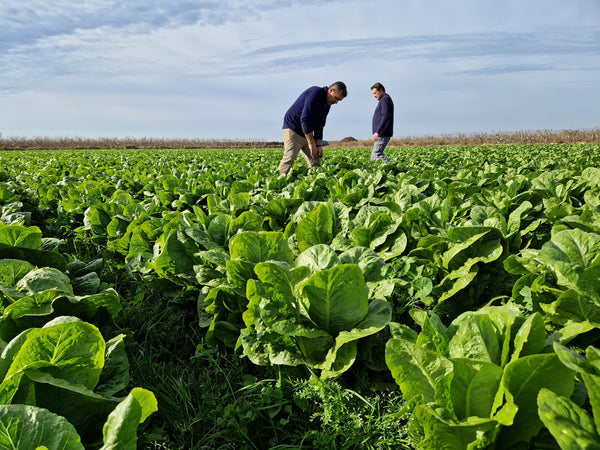

The main differences between conventional and organic avocado come down to farming methods, the use of chemicals, harvest timing and environmental impact. When this fruit is grown without synthetic pesticides or chemical fertilisers and harvested at its optimal ripeness, the result is an avocado with greater nutritional density and better flavour.
Have you ever tried an avocado that looked perfect on the outside, but when you cut it open it was green, hard or tasteless? As Eduardo, farmer and founder of Campos del Abuelo, tells us: Many of our customers have told us they feel it's the first time they've ever really eaten an avocado in their lives. The difference between a naturally ripened organic avocado and a conventional one can be huge.
What really makes organic avocado different from conventional?
Organic avocado farming follows completely different principles from conventional farming. While conventional farming allows up to 30 different types of synthetic pesticides and NPK chemical fertilisers, organic farming operates under strict regulations that ban these substances entirely.
In Spain, especially on the Costa Tropical of Granada and Málaga, where 90% of national production is concentrated, organic avocados are grown in tune with natural cycles. As our partner farmer explains: We don't harvest by the calendar; we measure the oil content. That's the key indicator to know if it's ready.

The fundamental difference lies in how the crop is managed. Organic growers use techniques such as biological control with beneficial insects like Cryptolaemus montrouzieri to fight pests, while conventional growers turn to chemical cocktails that include neonicotinoids such as imidacloprid, detected in 12% of samples analysed according to recent studies.
The secret of flavour: natural ripening vs. forced ripening
Why do so many supermarket avocados taste watery? The answer lies in when and how they're harvested. Spanish organic avocados are picked only after reaching physiological maturity on the tree, a process that takes between 12 and 18 months depending on the avocado variety.
The problem with many avocados that come from abroad or have been picked too early is that they're ripened with ethylene to speed up the process, the farmer explains. But if the fruit wasn't ready, it's no use. It stays green inside, without the texture or taste it should have.
| Aspect | Organic Avocado | Conventional Avocado |
|---|---|---|
| Ripening time | 12-18 months on the tree | Early picking + ethylene chambers |
| Fat content | 22-25% | 18-20% |
| Soluble solids (°Brix) | 1.5-2 points higher | Standard |
| Shelf life | 7-9 days at 5°C | 3-5 days (40% become rubbery) |
This difference in ripening translates into a completely different aromatic profile. Organic avocados develop notes of hazelnut and freshly cut grass thanks to volatile compounds such as 2-methylpropanal and hexanal, which are absent in artificially ripened conventional ones.
Proven nutritional benefits of organic avocado
Newcastle University analysed more than 343 comparative studies and found that organic crops contain up to 60% more antioxidants than conventional ones. In the specific case of avocado, this means:
• 18% more oleic acid: the monounsaturated fatty acid that looks after your heart
• 3.9mg/100g of vitamin E: 30% higher than conventional
• 290μg/100g of lutein: compared with just 180μg in conventional
• 35% more potassium: reaching 485mg/100g
As Dr. Mª Dolores Raigón of the Universitat Politècnica de València points out: There is clear scientific evidence that organic fruit has a higher content of vitamins, minerals, antioxidants and proteins. And it's not just about numbers — these nutrients have greater bioavailability because they aren't chelated by chemical residues.

How is an organic avocado really grown in Spain?
Growing organic avocados is a true art that blends age-old techniques with modern knowledge. Instead of synthetic NPK fertilisers, organic farmers use:
• Plant-waste compost and worm humus, which improve the soil's cation exchange capacity
• Cover crops with species such as Trifolium subterraneum that increase soil macroporosity by 38%
• Natural biocontrol using Beauveria bassiana against thrips, reducing infestations by 70% without toxic residues
Avocado trees, when managed properly, are highly resistant to pests, our farmer confirms about the Hass avocado variety. This natural resistance is boosted by practices like mulching with pruning debris, which cuts evaporation by 30% — crucial for a crop that needs between 600 and 1,000 litres of water per kilo.
The environmental impact: beyond the avocado on your plate
The environmental difference between the two systems is dramatic. While organic plots in Málaga keep 30% more organic matter in the soil, intensive conventional farming has caused:
• Losses of 45 tonnes of soil per hectare a year on Andalusian slopes
• Nitrate pollution exceeding 50mg/L in groundwater
• Documented saltwater intrusion in 12 wells in the area
What's more, choosing Spanish organic avocados reduces the carbon footprint by 40% compared with conventional imports. As our article on the water footprint of avocados explains, sea freight from Mexico generates 1.2kg CO₂ per kilo, compared with just 0.3kg for national distribution.
Why is organic avocado more expensive? The economic reality
Farming with traditional methods costs more, that's clear, our farmer admits. We don't use chemicals, and that means more manual work, more monitoring, more dedication.
| Cost factor | Impact on price | Benefit for the consumer |
|---|---|---|
| Manual labour | +20% labour costs | Handcrafted care for every fruit |
| Lower yield | 15-20% less production | Fruit with a higher concentration of nutrients |
| Certification and inspections | Administrative costs | Guarantee of full traceability |
| No post-harvest chemicals | Greater waste | 100% natural product |
Average prices in Andalusia reflect this reality: 8€/kg for organic versus 3.90€/kg for conventional. However, direct-sale platforms like Campos del Abuelo are shortening the chain, offering Spanish organic avocados at more affordable prices while guaranteeing a fair price for the farmer.
How to spot a quality organic avocado
Not everything that glitters is green gold. To make sure you're buying genuine organic avocado:
• Check the origin: Spanish avocados are in season from October to May
• Ask about traceability: a good supplier can tell you exactly which farm it comes from
• Look at the skin: it may have small natural imperfections, a sign it hasn't been treated
As our farmer explains about the importance of knowing the origin: We want people to know the farmer behind the fruit that reaches their home, to know they're a real person, to know a bit of their story.

FAQ: Frequently asked questions about organic vs conventional avocados
Do organic avocados ripen faster than conventional ones?
Actually, organic avocados ripen in a more predictable and even way. Because they're harvested at their optimal oil content, the avocado ripening process naturally takes 3-8 days at room temperature. Conventional ones, having been treated with ethylene, can go from green to overripe in a matter of hours.
Is it true that conventional avocados are among the fruits with the fewest pesticides?
Yes, the Environmental Working Group ranks them on its "Clean 15" list, with only 2% of samples showing detectable residues. However, organic certification guarantees zero residues, which is crucial for sensitive groups such as children and pregnant women. Plus, the issue isn't just the fruit, but the environmental impact of how it's grown.
Can I grow my own organic avocado at home if I live in Spain?
Of course! If you live in a frost-free area (Mediterranean coast, Canary Islands, southern Andalusia), you can grow your own avocado tree. You'll need patience — a tree grown from seed takes 10-15 years to bear fruit. We recommend reading our guide on avocado plant care to get off on the right foot.
How can I tell if my organic avocado is perfectly ready to eat?
The trick is gentle pressure near the stem — it should give slightly. A well-harvested organic avocado will develop a perfect creaminess when it's ready. If you want to dig deeper, we have a complete guide on how to tell if an avocado is ready to eat.
Are Spanish organic avocados available all year round?
The natural season runs from October to May, with peak quality between December and March. Out of season, avocados are usually imported or have been kept in cold storage. That's why in our avocado selection we always prioritise seasonality and freshness.
The avocado's journey doesn't end here
Choosing between a conventional and an organic avocado goes far beyond the price on the label. It's a decision that affects your health, the environment and the future of our farming. Spanish organic avocados don't just offer better flavour and more nutrients; they represent a sustainable production model that respects the land and the people who work it.
As our farmer reflects: We're not driven by the label, but by conviction, because we know it's the most respectful way to work the land. And you can taste that conviction in every bite.
Ready to taste the difference? At Campos del Abuelo we bring you avocados straight from the tree to your table, harvested at their best and with all the traceability you deserve. Because we believe that when you know where your food comes from and how it's grown, every bite tastes better.


