
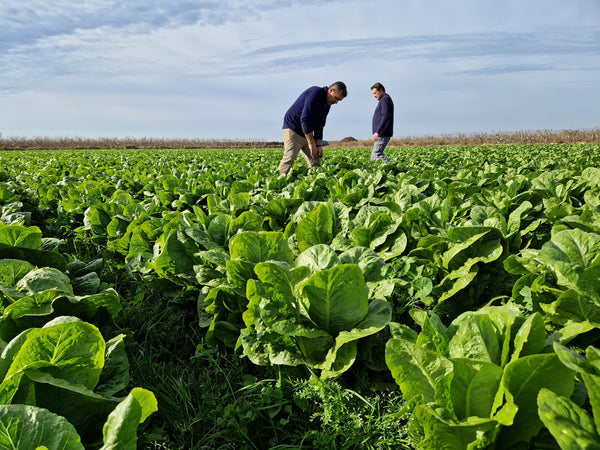
Between January and July, Spain exported 7.5 million tonnes of fruit and vegetables, 1% less than the previous year, but earned 12,039 million euros, 6% more, according to customs data processed by FEPEX and released on 25 September. Oranges fell 12% in volume, lemons 8.6% and onions 13.5%. A farmer we spoke to puts his own numbers on that rise in value: his price didn't go up, it went down.
“The year before I got 36 cents, and this year 29”
“Last season they paid me 29 cents for my Navelina,” he says. “Of course they didn't raise my price. If anything, they lowered it,” compared with the year before, when he got 36 cents a kilo. From one year to the next that's a 19% drop, the exact opposite of what the average export value shows.
The farmer also puts the price figure itself in context: “It's not so much the price anymore, it's that we've been going through years of low production, so at that price it's nowhere near enough to cover costs.”
Why exports are down
Asked why he thinks fewer oranges are being exported, he gives three reasons. First, competition: “There's huge competition that's been flooding the markets for a long time.” Second, consumption: “People don't want to get their hands dirty peeling an orange.” And third, production: “There's also a smaller harvest because a lot of fields are being abandoned.”
- Fewer kilos, higher average value in Spanish exports from January to July, according to FEPEX.
- The farm-gate price isn't keeping up with that value: from 36 to 29 cents a kilo for Navelina in one year.
- Competition, consumption and abandoned fields, the three reasons the farmer gives for the drop in export volume.
Sources: Fruit and vegetable exports January–July 2026 (Customs / FEPEX) — our own reporting, 25/09/2026 · Testimony gathered directly by us.

