
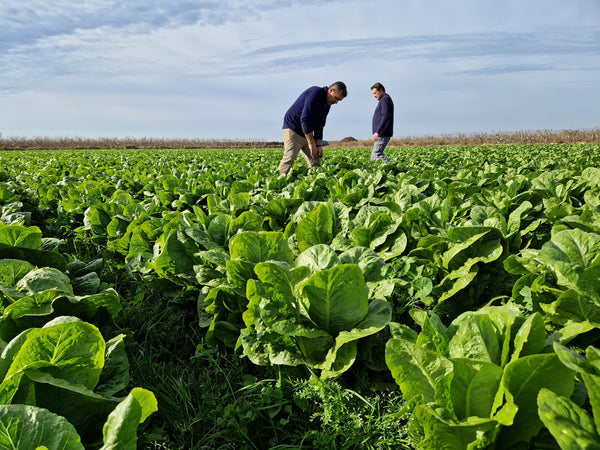
The Valencia region will pick around 240.000 tonnes of persimmons this season, 34% less than last year, according to La Unió. It's the worst harvest in a decade. In the Ribera Alta, a grower confirms the half harvest and puts numbers to what the forecasts don't show: today a persimmon needs between eight and eleven treatments to reach the packhouse, when seven or eight years ago it needed none.
The forecast from La Unió de Llauradors blames the drop on heat, storms and pests, led by mealybug (cotonet) and whitefly. The organisation has requested emergency authorisations for active substances such as acetamiprid and cyantraniliprole to keep them under control.
“Half a harvest, maybe a little more”
A persimmon grower from the Ribera Alta we spoke to confirms the general picture: “This year we'll have half a harvest, maybe a little more, but not much more.”
His own case, though, goes against the tide. “In my case it's more than last year, because last year my trees didn't produce. I never found out why, but they didn't.” That's persimmons for you: a tree can fail a whole season with no clear cause.
From zero treatments to eleven
Where there is a clear cause is mealybug. This grower hasn't lost fruit to the pest, and he explains why: “I treated it in time and I don't have cotonet.”
The price of that peace of mind is counted in passes with the backpack sprayer and the tractor. “I've done seven treatments so far, one thing and another: for the fungus, for the cotonet, for sooty mould… And there are still two or three more before they're picked.”
The comparison with the recent past is what stands out most. “Seven or eight years ago, when the fungus problems started, we didn't do any treatments. We've gone from no treatments at all to between eight and eleven, depending.”
Every one of those passes means product, labour and diesel, which costs 48% more this year than last. If you want to know more about this crop's health problems, we cover them in the challenges of growing persimmons and in how to fight sooty mould.
Why so many persimmons end up as rejects
Even with a healthy tree, there's no guarantee the fruit makes it to the shop. “Persimmons are very delicate because the skin is so thin. So a lot of them get damaged,” he explains.
The main enemy isn't an insect, it's the tree itself: “A lot of persimmons get rejected precisely because of the marks left by branches rubbing against them, mainly.” The wind moves the branches, the branches rub the skin and the fruit is left marked. Inside it's perfect, but it no longer makes the commercial grade.
Pecked or stung fruit isn't even touched: “Stings and that, that goes on the ground; none of it gets picked.”
Sixty cents, “reasonable if there's a good crop”
Packhouses are paying around €0.60 per kilo at the farm gate, according to this grower. He considers it “a reasonable price if there's a good crop”.
That condition is the key. With half a harvest, more treatments and diesel through the roof, the same sixty cents are spread across far fewer kilos.
What it means for you when you buy persimmons
- There'll be fewer persimmons, especially in the best-looking grade, the one that reaches the shelves without a mark.
- A streak on the skin isn't a flavour defect. It's a branch rub. That persimmon tastes exactly the same.
- The persimmon that reaches you has been through eight to eleven approved treatments to arrive healthy. That's the toll of a crop that barely had pests a decade ago.
And if you take a firm persimmon home, remember how to get rid of its astringency before eating it.
Sources: Valencia Fruits — Se prevé una cosecha de kaki sobre las 240.000 toneladas · COPE — La cosecha de caqui cae un 34% y registra su peor campaña en una década · AgroCLM — Movilizaciones contra la subida del combustible

